
【FAQ】How Compost Turners Accelerate the Maturation Process
In the industrial chain of organic waste resource utilization, the efficiency of compost maturation is the core bottleneck determining production cycles and final product quality. The key to overcoming this bottleneck lies in precise, efficient physical intervention in the compost pile’s micro-environment—precisely where compost turners offer irreplaceable value.
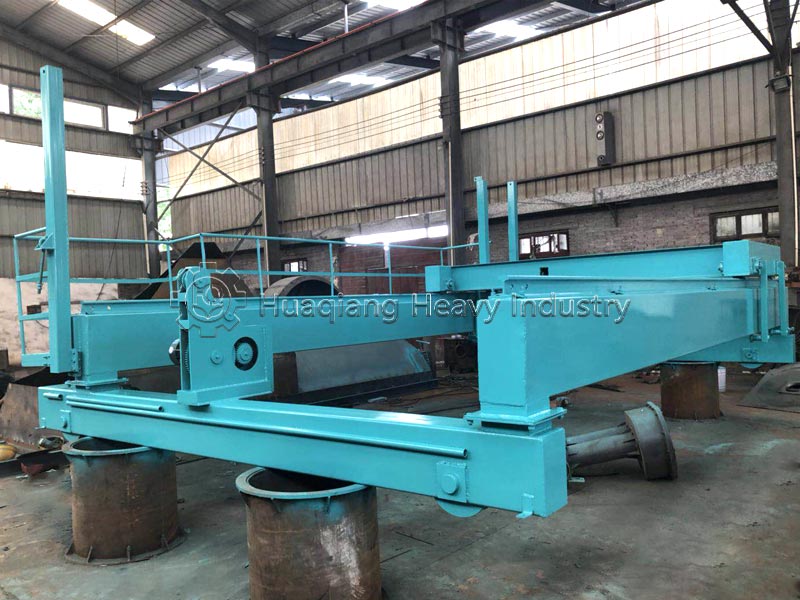
The first mechanism by which compost turners accelerate maturation is the revolutionary restructuring of the pile’s oxygen supply system. Aerobic composting is fundamentally the oxidative decomposition of organic matter by aerobic microorganisms, and the rate of oxygen supply is often the rate-limiting step of the entire process. In traditional static composting, oxygen can only penetrate a few dozen centimeters below the surface via natural convection; deep-seated material easily falls into an anaerobic state, producing organic acids and foul-smelling gases that severely inhibit maturation. Compost turners use the powerful mechanical action of rotating shafts or wheels to toss deep-layer material to the surface while forcibly entraining fresh, oxygen-rich air into the core of the pile. This process significantly increases the pile’s porosity, raising oxygen levels by over 30%. Crucially, compost turners do not merely provide a one-time oxygen boost; instead, periodic turning dynamically refreshes the oxygen environment within the pile. Each turning event acts as a thorough “air exchange,” ensuring that aerobic microorganisms remain in an active metabolic state throughout the entire fermentation cycle.
The second mechanism by which compost turners accelerate maturation is the active regulation of the pile’s temperature profile. Compost maturation requires a sustained high-temperature phase (55–65°C) to eliminate pathogens, insect eggs, and weed seeds, while promoting the conversion of organic matter into stable humus. However, the balance between microbial heat generation and heat dissipation within the pile is extremely delicate: if the temperature is too low, microbial activity is insufficient; if it is too high (exceeding 70°C), microorganisms die, and fermentation ceases. Windrow turners facilitate the redistribution of heat within the compost pile through their turning action: they bring heat accumulated in the core to the surface for dissipation while simultaneously turning cooler surface material into the interior to absorb fermentation heat. This forced convection promotes temperature uniformity across the pile, keeping temperature fluctuations within a range of ±3°C. Even more sophisticated is the ability of modern turners to regulate the rate of heat dissipation by adjusting turning frequency; reducing turning frequency conserves heat when temperatures are low, while increasing it accelerates cooling when temperatures are high. This allows the pile temperature to be precisely maintained within the optimal range for microbial activity, significantly extending the duration of the effective high-temperature phase.
A third mechanism by which windrow turners accelerate the maturation process lies in their ability to achieve deep homogenization of the materials. Compost feedstocks typically consist of a mixture of components such as livestock manure, crop straw, bulking agents, and microbial inoculants; uneven distribution of these components—leading to localized imbalances in the carbon-to-nitrogen (C/N) ratio or improper moisture levels—can result in incomplete decomposition. The crushing and mixing functions of the turner break up clumps and thoroughly blend materials from different layers. Whether utilizing the staggered disc layout of a disc-type turner, the counter-rotating blades of a double screws compost turning machine, or the circulating tines of a chain compost turning machine, the core design principle is to achieve comprehensive, three-dimensional convection—moving material from bottom to top and from interior to exterior. This forced homogenization ensures consistent fermentation conditions throughout the entire pile, fundamentally eliminating quality defects such as localized over-maturation or the presence of raw, undecomposed material.