
【 FAQ】How is moisture content controlled during the fermentation process?
Moisture content is the primary control parameter for the success of aerobic composting fermentation; it directly affects microbial activity, pile aeration, and the rate of decomposition (maturation). The optimal initial moisture range is 50%–60%; within this range, microbial metabolism is most vigorous, and the pile temperature rises most rapidly. If the moisture content is too low (<40%), microbial activity is inhibited due to water scarcity, organic matter decomposition slows down, and the pile struggles to heat up. Conversely, if the moisture content is too high (>65%), water fills the voids between materials, obstructing oxygen diffusion; this leads to localized anaerobic fermentation, producing foul-smelling gases like hydrogen sulfide and extending the maturation period.
Control methods are as follows:
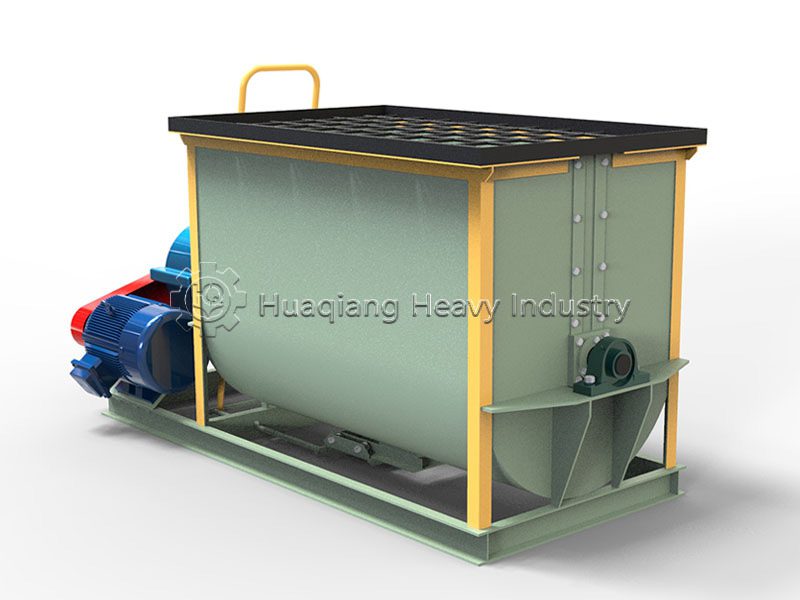
Pre-fermentation adjustment: Before raw materials enter the fermentation zone, use a half-wet material crusher to pretreat high-moisture materials (such as fresh chicken manure with >80% moisture) and then mix them proportionally with dry bulking agents (straw powder, rice husks, sawdust, etc.). A horizontal mixer or BB fertilizer mixer is recommended for thorough mixing to ensure uniform moisture distribution. Adding 1 ton of dry bulking agent can reduce the mixture’s moisture content by approximately 10–15 percentage points.
Moisture control during fermentation: During the pile’s heating-up phase (days 1–3), moisture evaporation is limited, so adding water should be avoided. During the high-temperature phase (days 4–12), significant evaporation occurs, with a daily loss of 1%–2% moisture. If cracks appear on the pile surface, water can be evenly added via a spray system during turning; however, the amount added in a single instance should not exceed 3% of the total material weight to prevent localized over-wetting. When using a windrow compost turner or large-wheel composting turner, the integrated spraying system can be utilized to adjust moisture levels simultaneously.
Process monitoring: Daily sampling using the “hand-squeeze test” is recommended for a quick assessment—a benchmark moisture content of approximately 55% is indicated when the material forms a clump in the hand but crumbles upon hitting the ground. Alternatively, a portable moisture meter can be used to take measurements three times daily and track the moisture trend.
Control during the maturation phase: Once the material enters the maturation stage (after 15 days), the moisture content should be gradually reduced to 30%–35% by increasing the frequency of windrow turning (using a compost turner) and enhancing aeration (activating the bottom aeration system); this prepares the material for subsequent crushing and granulation. If the moisture content of the output remains too high, a rotary dryer can be used for further dehydration to ensure the material meets the required moisture specifications prior to granulation.