
Straw to High-Organic-Material Fertilizer: A Synergistic Process of Crusher and Fermentation Agent
Crop straw is an excellent raw material for producing high-quality organic fertilizer. However, its high cellulose content, dense lignin structure, and severely imbalanced carbon-nitrogen ratio necessitate a deep synergistic process between crusher and fermentation agent in straw fertilizer production. Even with a single step done well, fermentation efficiency remains low; only through proper coordination can straw that would normally take months or even a year to naturally decompose be transformed into high-organic-material fertilizer within 25-35 days. The following analysis of this synergistic process focuses on three stages: crushing pretreatment, carbon-nitrogen ratio adjustment, and microbial inoculation.
Crushing Pretreatment: Opening the Door for Microorganisms
The waxy layer and dense fibrous structure of straw form the first barrier against microbial invasion. The purpose of crushing is to break down this physical barrier, increasing the specific surface area of the material and creating conditions for subsequent microbial attachment and decomposition.
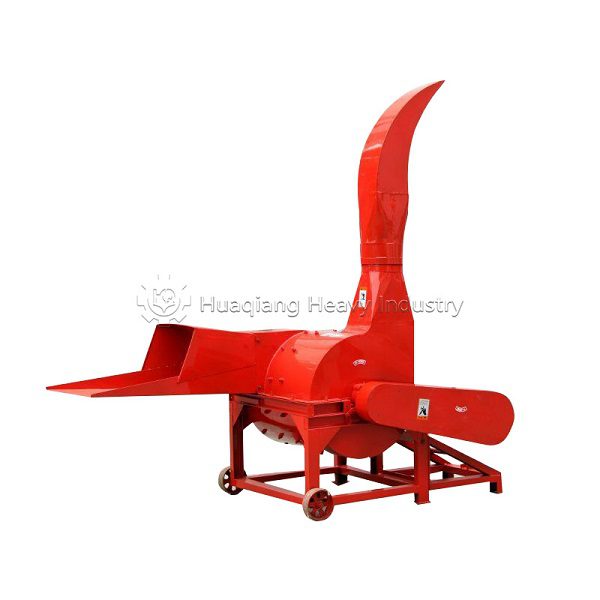
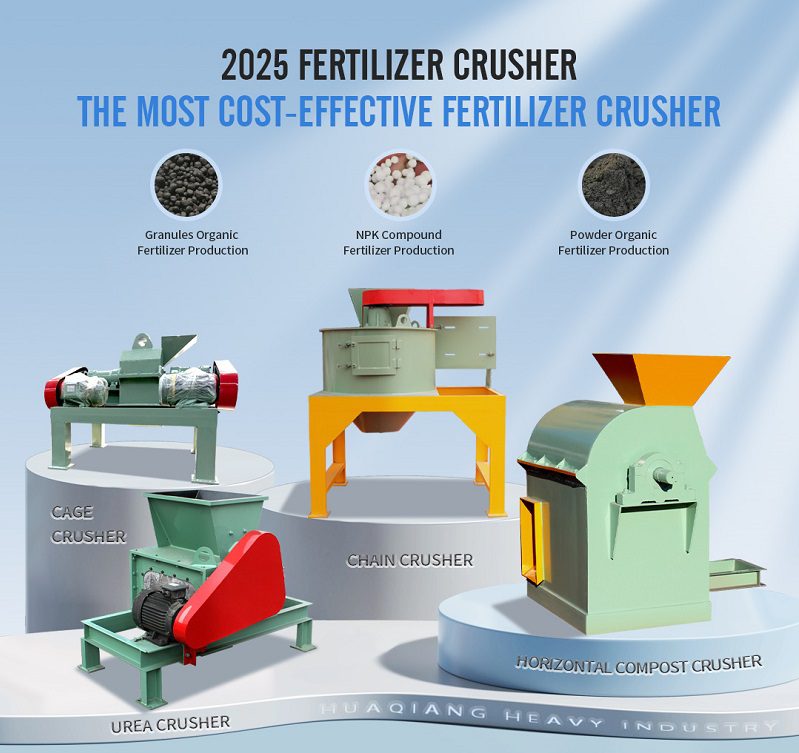
Crushing Fineness: Generally, straw should be crushed into small pieces of 1-3 cm. The finer the crushing, the larger the contact area between microorganisms and the material, resulting in faster decomposition. For small-scale production scenarios processing 5-10 tons of straw per day, a hammer mill straw crusher can be used, achieving a fineness of 3-5 mm after crushing, meeting the requirements for subsequent fermentation. Medium to large-scale production scenarios require high-power crushing equipment to match the larger processing capacity.
Equipment Selection Considerations: Straw has a high fiber content and a relatively hard texture, necessitating dedicated straw crushing equipment. When selecting equipment, focus on power matching (avoiding insufficient power), wear-resistant materials (prioritizing equipment made of wear-resistant steel plates), and process compatibility.
Carbon-Nitrogen Ratio Adjustment: Providing Microorganisms with a Nutrient Meal
This is the most crucial yet easily overlooked aspect of straw fertilizer production. The carbon-nitrogen ratio of straw is generally high—approximately 60:1 for corn straw and up to 80:1 for wheat straw. However, the optimal carbon-nitrogen ratio for aerobic microorganisms is 25:1 to 30:1. If the carbon-nitrogen ratio is too high, microorganisms will reproduce slowly due to nitrogen deficiency, the fermentation temperature will not rise, and the fermentation cycle will be indefinitely prolonged.
How to Adjust? The core idea is to supplement the straw with nitrogen. Approximately 5-10 kg of urea needs to be added per ton of dry straw, or it can be mixed with 20-30% livestock and poultry manure (chicken manure, pig manure, etc.) for fermentation. The proper adjustment of the carbon-nitrogen ratio directly affects whether the subsequent microbial agent can “activate”—only under a suitable carbon-nitrogen ratio can the fermenting bacteria rapidly multiply and generate heat, pushing the pile temperature to a high-temperature range of 55-70℃.
III. Fermentation Agent Inoculation: “Accelerating” Fermentation
In its natural state, straw relies on a small number of indigenous microorganisms in the environment for decomposition, which is extremely inefficient. Artificially adding a highly efficient fermentation agent is equivalent to installing an “accelerator” for the fermentation process.
Agent Dosage: Generally, 0.5-1 kg of fermentation agent is added per ton of straw. If the material has a high moisture content or high fiber content, the dosage can be increased appropriately.
Inoculation Method: Dilute the agent with 5-10 times its volume of rice bran, wheat bran, or corn flour, then evenly sprinkle it into the material, ensuring uniform distribution of the inoculum. When possible, the inoculant can be mixed with cake powder (such as soybean cake or rapeseed cake, approximately 20 kg/ton of dry straw) and added together. The cake powder provides both nitrogen and serves as a “culture medium” for the inoculant.
Moisture Content Control: After inoculation, the material moisture content should be maintained at 55%-65%—ideally, it should clump together when squeezed in the hand, with water seeping between the fingers but not dripping. Too low a moisture content hinders microbial activity, while too high a moisture content will clog pores, leading to anaerobic fermentation.
Fermentation Process Management: Turning and Maturity Assessment
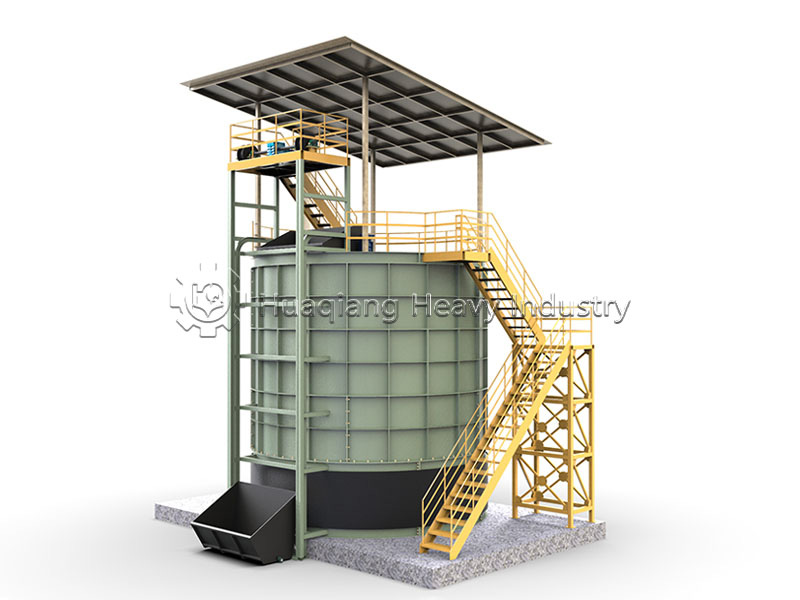
After inoculation, pile the material into windrows approximately 2-3 meters wide and 1.5 meters high. Aerobic fermentation requires sufficient oxygen. The first turning should be performed when the center temperature of the pile reaches above 55℃. Thereafter, the pile should be turned every 3-7 days. Maturity is complete when the pile volume collapses by 1/3 to 1/2, the color turns dark brown, and there is no odor but a soily aroma.
In summary, the core of producing high-organic-mass fertilizer from straw lies in the three-step linkage of “crushing and breaking down cell walls—adjusting the carbon-nitrogen ratio—inoculating and fermenting with bacteria.” The crusher opens the physical channels, the carbon-nitrogen ratio adjustment provides chemical nutrients, and the fermentation agent injects biodynamics—all three are indispensable.
The journey from crop straw to high‑organic‑matter fertilizer is a perfect example of process synergy, where mechanical pretreatment, chemical adjustment, and biological inoculation must work in harmony. The straw crusher (and, for moist feedstocks, the half-wet material crusher machine) breaks down the physical barriers of lignin and cellulose, creating the surface area needed for microbial attachment. This step is the first and indispensable stage of the organic fertilizer production process, setting the stage for efficient decomposition. The subsequent carbon‑nitrogen ratio adjustment and inoculation with specialized bio-organic fertilizer fermentation equipment accelerate the breakdown, transforming straw that would otherwise take months into mature, stable compost within 25‑35 days. For producers seeking a complete solution, turnkey fertilizer production solutions integrate these unit operations—from crusher and mixer to fermenter and screener—into a seamless, automated line. Finally, the matured material can be further processed through an organic fertilizer combined granulation process (e.g., drum + disc) to produce uniform, high‑strength pellets for commercial sale. In essence, the crusher‑fermentation agent synergy is not just a technical detail—it is the core engine that turns agricultural waste into a valuable soil‑building resource, enabling sustainable, circular agriculture on an industrial scale.