
What drying temperature for organic fertilizer won’t burn seedlings or damage microorganisms?
There’s no single answer to the drying temperature of organic fertilizer; it primarily depends on the fertilizer’s characteristics. The core value of bio-organic fertilizer is its live microorganisms, so drying must be designed to prevent damage. Ordinary organic fertilizers and compound fertilizers prioritize dehydration efficiency, allowing for a more relaxed temperature window. However, regardless of the type, hot air temperatures exceeding approximately 180℃ will exacerbate organic matter loss and nutrient degradation. The correct approach is segmented temperature control, rather than using a single high-temperature point for “baking.”
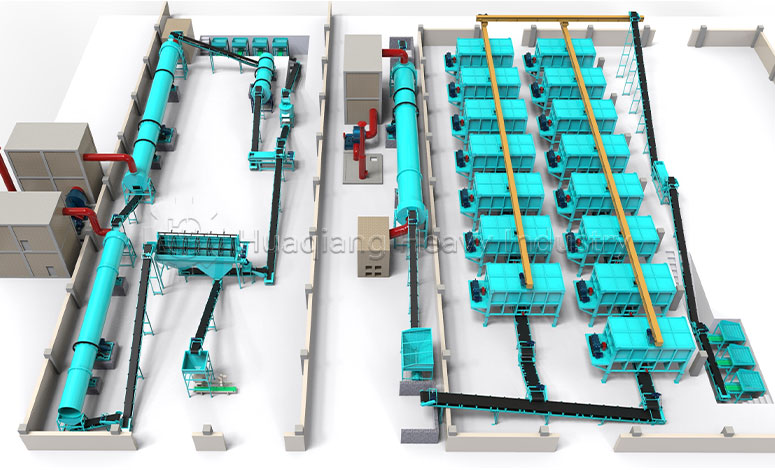
I. Drying Temperature Window for Ordinary Organic Fertilizer and Bio-organic Fertilizer
The drying temperature of bio-organic fertilizer is strictly constrained by the survival rate of live microorganisms. In industry practice, the drying temperature for bio-organic fertilizer is typically controlled between 50-75℃, using low-temperature pneumatic dehumidification drying, which does not affect the survival and reproductive vitality of effective live microorganisms. More precise control is based on material temperature: when using two-stage variable-temperature drying, the ambient temperature of the drying system should not exceed 120℃, but the material temperature must be strictly controlled below 65℃. Testing shows that the survival rate of beneficial microorganisms can exceed 90%. Some high-activity microbial fertilizer processes even recommend maintaining the drying temperature at 35-45℃ to maximize the preservation of microbial activity. The key rule is that the material temperature should not exceed 65℃, as high-temperature drying will kill the microorganisms, causing the bio-organic fertilizer to lose its viable microbial function.
Ordinary organic fertilizers do not have viable microbial indicators, so drying temperatures can be higher. The hot air temperature for drying ordinary organic fertilizers is typically between 80-120℃, used for rapid moisture removal. However, it should be noted that when the temperature exceeds 130℃, a large number of beneficial microorganisms in the organic fertilizer will die, and some organic matter (such as humic acid) will also be carbonized, leading to a significant decrease in fertilizer effectiveness. As for “seedling burn,” the root cause is often not the drying temperature itself, but whether the material is fully decomposed: undecomposed organic fertilizer applied to the soil will undergo secondary fermentation, releasing heat and organic acids, directly burning the roots and seedlings; drying only dehydrates and cannot replace decomposition. Bio-organic fertilizers, through complete decomposition and low-temperature drying, avoid the risk of seedling burn from the source.
II. Three-Stage Temperature Control Logic
The purpose of segmented temperature control is to apply heat to the material in a rhythm of “gentle first, then efficient, and finally stable,” avoiding surface hardening or internal nutrient damage caused by a single high temperature. The preheating stage temperature is typically set at 40-60℃ to slowly evaporate surface free water, preventing high-moisture materials from forming a crust and locking in internal moisture due to sudden heating. The main drying stage temperature rises to 60-80℃ to quickly remove internal moisture, but fine-tuning is needed based on material characteristics: livestock manure is best controlled at 65-75℃ to prevent ammonia nitrogen volatilization, while mushroom residue should be controlled at 60-70℃ to avoid decomposition of heat-sensitive components. The cooling stage lowers the material temperature to below 40℃ to prevent residual heat from continuing to act and causing nutrient loss, and also prepares the material for packaging and storage. A typical setting for drum-type segmented temperature control is: drying stage 40-55℃ to remove free water, stabilization stage 55-65℃ to remove some bound water, and final drying stage 65-75℃ to precisely control the target moisture content. The three stages are not isolated. The hot air temperature should be 10-20°C higher than the material temperature to ensure heat transfer efficiency. However, excessive temperature difference can lead to surface hardening of the material, requiring real-time monitoring and coordinated adjustment.
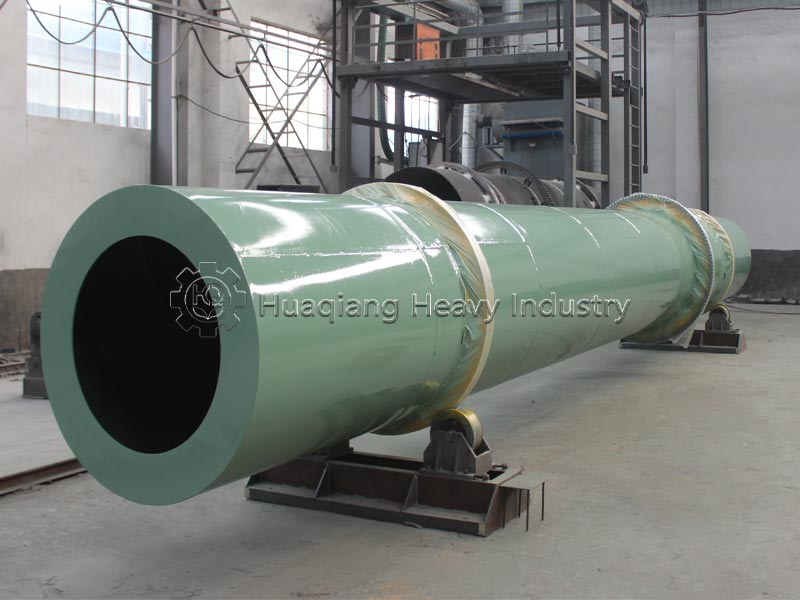
III. Protection of Microbial Activity through Cooling After Drying
The end of drying does not mean the end of microbial activity protection. The granules immediately after leaving the dryer are still at a relatively high temperature (up to 80-100°C). If packaged directly, residual heat will continue to act inside the bag, causing inactivation of the microbial agent and granule clumping. The goal of the cooling stage is to reduce the granule temperature from 80-100°C to below 40°C, preventing condensation inside the packaging bag and granule adhesion. For bio-organic fertilizer, rapid cooling to room temperature after drying is essential to prevent residual heat from affecting the stability of the microbial agent. Insufficient cooling has hidden consequences: the viable bacteria count may meet the standards during factory testing, but it will rapidly decline after several weeks of storage, significantly shortening the shelf life. The airflow and residence time in the cooling stage need to be matched with the drying capacity; cooling time should not be compressed to increase production.
IV. FAQ: What if low-temperature drying capacity is insufficient?
Q: Bio-organic fertilizer must be dried at low temperatures, but the drying speed is slow and the capacity is low. Is there a way to balance live bacteria and yield?
A: There are three practical approaches. First, front-end moisture control: Before entering the dryer, reduce the moisture content of the incoming material through mechanical dehydration or remixing. For every percentage point reduction in incoming moisture, the evaporation load of the dryer decreases linearly, allowing for considerable output even at low temperatures. Second, use two-stage variable temperature or vibrating fluidized bed drying: Introduce low-temperature hot air into the vibrating fluidized bed of material, forcing rapid evaporation of surface moisture under negative pressure. The residence time of the material in the drying system can be controlled within 10 minutes, while the material temperature does not exceed 65℃, resulting in a live bacteria survival rate of over 90%. Third, combined drying: First, remove most of the free water at a lower temperature, then complete the final drying with a slightly higher air velocity, provided the material temperature does not exceed the limit, instead of using the same low-temperature “slow drying” throughout the entire process. Insufficient low-temperature drying capacity is often not due to excessively low temperatures, but rather to excessively high moisture content at the source or improper airflow matching. These two variables should be addressed first before considering equipment upgrades.
V. Matching Drying Temperature to Upstream Lines and Equipment
The drying temperature window should be matched to the upstream line and equipment, not selected in isolation. On a sheep manure organic fertilizer production line or a cow manure organic fertilizer production line, fiber content and moisture variation affect the preheating and main drying stages; on a chicken manure organic fertilizer production line, higher viscosity and ammonia nitrogen volatilization require tighter control of the main drying temperature. A disc granulation production line determines particle size and initial moisture, which in turn affect the drying load. Upstream, a chain compost turning machine or a windrow composting machine influences fermentation uniformity and incoming moisture, and therefore the temperature profile entering the dryer. For any organic fertilizer production line, the practical rule is to set the drying temperature according to material temperature, microbial survival requirements, and the actual moisture load from the granulation and composting stages, rather than copying a single temperature setpoint across different manure-based lines.
Controlling the drying temperature of organic fertilizer essentially involves finding a balance between “dehydration efficiency” and “activity retention.” For bio-organic fertilizer, the minimum material temperature should be ≤65℃, while for conventional organic fertilizer, efficiency should be prioritized within the 80-120℃ range. Both utilize a three-stage temperature control system instead of single-point high-temperature control, and finally, sufficient cooling is used to “fix” the state of live bacteria and granules. Managing temperature, staged temperature control, and cooling separately minimizes the risks of burning seedlings and damaging bacteria.