
Large Wheel Compost Turner: Revolutionizing Fertilizer Production?
In today’s burgeoning sustainable agriculture, composting technology is undergoing a quiet yet profound transformation. Among the advancements, the large wheel compost turning machine stands out as the core driver of modern fertilizer production lines. It not only efficiently processes organic waste but also collaborates with other fertilizer equipment to propel the future of green farming.
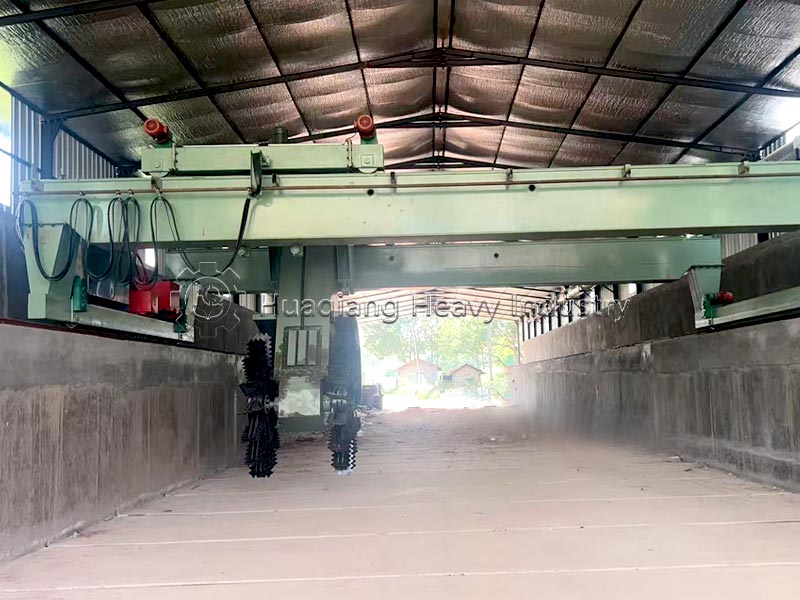
Imagine compost piles as sleeping treasures, and the large wheel turner as the magician that awakens them. With its robust wheeled structure and powerful turning capacity, this equipment glides through composting sites with ease. It turns the compost, introducing fresh oxygen; it regulates temperature, spurring microbial activity; it mixes materials, ensuring even decomposition. Compared to traditional manual turning, it saves up to 70% in labor and halves the composting cycle, accelerating the process of turning “waste into gold.”
Yet, the turner does not work alone. In a complete fertilizer production system, it cooperates seamlessly with other fertilizer equipment, creating a symphony of synergy. For instance, half wet material crusher take the stage first, breaking down raw materials like straw and food waste into fine particles to set the stage for fermentation; mixers then step in, uniformly blending nutrients such as nitrogen, phosphorus, and potassium to achieve an ideal carbon-to-nitrogen ratio; belt conveyor act as arteries, connecting each step to ensure a smooth and efficient flow. Together with the turner, these devices form an automated production line from waste to premium fertilizer, significantly boosting efficiency and product quality.
The advantages of the large wheel turner extend far beyond this. Its design ingeniously blends engineering wisdom with ecological considerations: the turning process promotes aerobic fermentation, reducing methane emissions and odors; even aeration prevents anaerobic dead zones, yielding safer and more stable compost; and its durable structure suits large-scale operations, meeting diverse needs from farms to fertilizer plants and even municipal treatment centers. In the global push for a circular economy, this equipment is becoming a key tool in reducing landfill use and carbon footprints.
Looking ahead, with the integration of smart sensors and IoT technology, fertilizer equipment will become more intelligent and precise. Turners might monitor compost moisture and temperature in real-time, automatically adjusting turning frequency; other devices will also optimize entire processes through data linkage. This is not just a technological revolution but a profound stewardship of Earth’s resources.
From turners to the entire family of fertilizer equipment, they collectively embody the timeless theme of “turning waste into treasure.” On the path to green agriculture, these silently humming machines are driving us toward a more fertile and sustainable future with immense power.