
One Little Ball Shaping Machine– Why All the Hype?
Have you ever wondered how those perfectly round, smooth fertilizer pellets go from a pile of powder to something that looks like a handful of marbles? The secret hides in a low key but crucial piece of equipment: the ball shaping machine. Today, let’s walk into its working site and see how it teams up with its “brothers” to turn waste into flawless golden beans.
But don’t rush to find the ball shaping machine just yet – you need to meet its upstream partners. Raw materials first get crushed to dust in a crusher, then thoroughly mixed in a horizontal mixer. Next comes the granulator (whether a disc granulator or a rotary drum granulator). At this stage, the granules are still angular and uneven – like a bunch of kids just crawled out of a mud puddle. That’s when the ball shaping machine steps in.
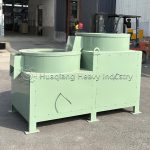
Inside the ball shaping machine, there are usually two or more high speed rotating discs or drums, lined with wear resistant rubber or polyurethane. The granules are thrown up, rub against each other, and tumble. Their sharp edges are gradually rounded off, and the surfaces become smoother and smoother. Imagine a river stone polished by thousands of years of water – only in this machine, the process is compressed into a few tens of seconds. Some models also spray a tiny amount of water or polishing aid, giving the pellets a shiny, candy coated finish.
After shaping, the pellets still can’t go straight into bags. They pass through a dryer to drive off excess moisture, then a cooler to calm down their hot bodies, and finally a screener to remove fines and twins (stuck together particles). Only the qualified round balls ride the belt conveyor, bouncing merrily into the automatic packaging scale.
What’s the installation site like? Workers are busy anchoring the ball shaping machine to a concrete foundation, checking the level again and again with a spirit level. Because if the machine tilts even two millimeters, the outgoing pellets will be round on one side and flat on the other. As they tighten bolts, they shine flashlights into the machine’s cavity to check the seams of the wear resistant liner. Welding sparks flicker in the corner, an overhead crane slowly lifts a drum, and the air smells of grease and fresh rubber.
So don’t underestimate this shaping machine. Without it, those granules would be like unpolished stones – neither attractive nor free flowing. The ball shaping machine gives them the final “dignity” – from rough to round, from waste to marketable product. Next time you grab a handful of granular fertilizer, take a look. Every pellet full and smooth as a pearl? That’s all thanks to this machine. Small as a ball may be, it spins the very soul of the entire production line.