
Rotary Drum Granulation Production Line: One-Stop Wet Process Solution
Wet Granulation Production Flow: The rotary drum granulation production line adopts a typical wet process, with the entire process revolving around four core stages: pelletizing, drying, cooling, and screening. After crushing and mixing, the raw materials are fed into the rotary drum granulator. Inside the drum, the materials are moistened with steam or spray liquid, adhering to each other and forming pellets as they roll. The wet pellets exiting the granulator typically have a moisture content between 8% and 12%, and then enter the drying drum to remove excess moisture. The dried pellets are at a high temperature and need to be cooled to near room temperature by a cooler before being classified by a screening machine. Qualified pellets are sent to a coating machine to be coated with an anti-caking agent, and finally enter the packaging system. Fine powder and large particles generated during screening are returned to the granulator for reuse through a recycling system.
The entire line adopts a negative pressure dust removal design. Dust-laden gases from the drying and cooling stages are discharged after being treated by cyclone dust collectors and wet scrubbing.

Complete Equipment List
A standard rotary drum granulation production line mainly includes the following equipment:
Crushing and Batching Section: Chain crusher, vertical crusher (for coarse crushing of raw materials); multi-bin batching system (static scale or belt scale).
Mixing Section: Twin-shaft paddle mixer or horizontal ribbon mixer to ensure material uniformity before granulation.
Pelletizing Section: Rotary drum granulator (core equipment, with steam and spray auxiliary systems).
Drying Section: Rotary drying drum, equipped with a hot air furnace (coal-fired, gas-fired, or biomass-fired).
Cooling Section: Rotary cooling drum, using natural or forced ventilation for cooling.
Screening Section: Rotary screen or vibrating screen, grading particle size is typically 2-4mm.
Coating Section: Rotary coating machine, spraying oil or powdered anti-caking agent.
Packaging Section: Automatic quantitative packaging scale, equipped with sewing bag or heat sealing machine.
Auxiliary Systems: Conveyor, Elevator, Dust Collector, Exhaust Fan, Electrical Control System.
Customized Designs for Different Capacities: Rotary drum granulation production lines can be modularly designed according to annual production needs:
Small Line (10,000-30,000 tons/year): Uses rotary drum granulators with a diameter of less than 1.5 meters. Simplified configuration; drying and cooling can be completed in sections using the same drum. Suitable for county-level fertilizer plants or cooperatives.
Medium Line (50,000-100,000 tons/year): Granulator diameter 1.8-2.2 meters; drying and cooling are separate and independent; equipped with automatic batching and PLC control; currently the mainstream configuration.
Large Line (150,000-300,000 tons/year): Granulator diameter 2.5-3.2 meters; equipped with two-stage drying, high-efficiency dust removal, and fully automatic packaging and palletizing; suitable for large-scale fertilizer enterprises.
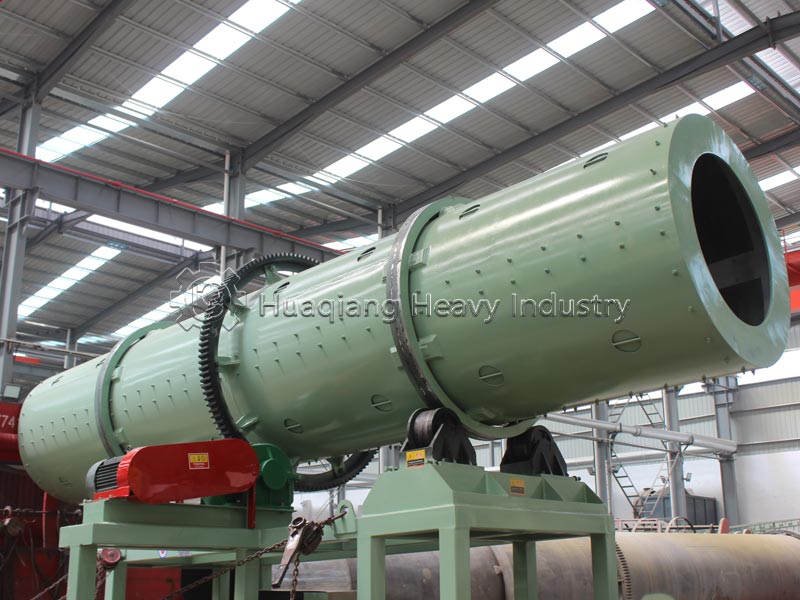
The wet granulation process of the rotary drum granulation production line is a classic example of organic fertilizer production granulation. However, the journey begins upstream with the organic fertilizer fermentation process, managed by turners to produce a stable compost. This material is then prepared using organic fertilizer raw material processing equipment, such as a half-wet material crusher machine. The prepared powder is then ready for granulation. Within the organic fertilizer granulator series, the rotary drum granulator is the workhorse for large-scale, continuous production of spherical granules. For smaller-scale or more flexible production, a organic fertilizer disc granulation production line or a new type two in one organic fertilizer granulator may be preferred. The choice of organic fertilizer production equipment depends on the scale and desired product characteristics. The rotary drum granulation production line is ideal for high-volume output, with its integrated drying, cooling, and screening stages. The entire line is designed for continuous operation, with negative pressure dust removal and a recycling system for returned material. For large-scale fertilizer plants, this configuration offers the best balance of capacity, product quality (high sphericity), and operational efficiency. Understanding the trade-offs between different organic fertilizer production equipment is key to building a successful and profitable line.
When customizing the design, it is also necessary to consider raw material characteristics (high-nitrogen formulas require enhanced anti-sticking measures), site conditions (utilizing gravity for equipment height differences), and local environmental protection requirements (fuel selection for the drying hot air furnace). A well-designed rotary drum granulation production line can achieve continuous and stable operation, control the overall energy consumption within a reasonable range, and produce finished granules with good roundness and high strength.