
Simple Compost Turner: The Essential Entry Point for Organic Waste Recycling
In the foundational world of composting, where the goal is to transform organic waste into valuable soil amendment, not every operation requires or can justify industrial-scale machinery. Enter the Simple Compost Turner—the most accessible and practical mechanical solution for initiating and maintaining aerobic decomposition. It is the essential entry point, the reliable workhorse that brings the critical benefits of aeration and mixing within reach of small farms, community gardens, and start-up organic waste processors.
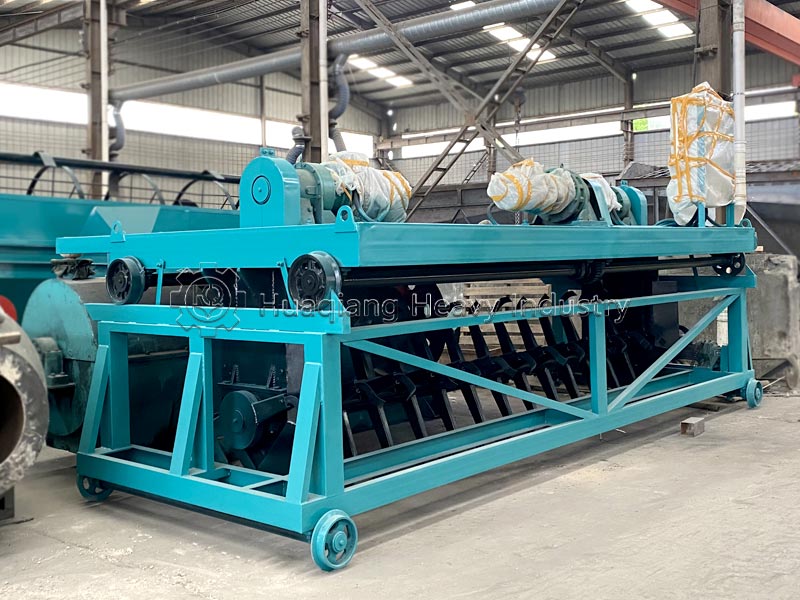
Core Advantages: Affordability, Simplicity & Versatility
The simple compost turner is defined by its straightforward purpose and design, delivering core functionality without complexity.
Unbeatable Cost-Effectiveness & Low Barrier to Entry
Its primary advantage is affordability. With a significantly lower initial investment compared to self-propelled or towed turners, it makes mechanical composting viable for operations with limited capital. It democratizes access to efficient compost management, enabling small-scale producers to move beyond labor-intensive and inconsistent manual forking.
Mechanical Simplicity & Ease of Operation
Typically a tractor-mounted or PTO-driven unit with a rotating drum fitted with fixed flails or tines, its operation is intuitive. There are no complex hydraulics or electronic controls. The operator drives the tractor along the windrow, and the rotating mechanism lifts, tears, and redistributes the material. This robust and easy-to-maintain design minimizes downtime and repair costs.
Flexibility in Application
It is not confined to perfect, large-scale windrows. A simple turner can effectively aerate smaller piles, help blend new feedstocks into an existing pile, and is adaptable to various site conditions. It is the ideal tool for batch composting, where multiple smaller piles are managed simultaneously based on feedstock availability.
Comparative Role: Choosing the Right Level of Technology
Understanding where the simple turner fits helps in selecting the appropriate technology for a project’s scale and goals.
| Feature | Simple Compost Turner | Large Wheel Compost Turner |
| Power Source | Dependent on a tractor (PTO or hydraulic). | Integrated, powerful diesel engine. |
| Capacity | Moderate. Suited for small to medium windrows. | Very High. For large, long industrial windrows. |
| Labor & Efficiency | Requires a tractor and operator. Good efficiency for its class. | High efficiency. One operator can process vast volumes. |
| Mixing Quality | Good. Provides adequate aeration and breakdown. | Excellent. Deep, consistent, homogeneous turning. |
| Primary Use Case | Small farms, landscapers, community composting, pilot projects. | Commercial composting facilities, municipal operations, large farms. |
| Investment Cost | Low (plus cost of tractor). | High. |
Synergistic Function: The Heart of a Basic Composting System
In a basic composting setup, the simple turner is the central active management tool.
Integrating Feedstock Preparation: It works in tandem with basic shredders or chippers to incorporate coarse materials like yard waste into the pile, improving structure from the start.
Enabling the Composting Cycle: By providing periodic aeration, it kick-starts and sustains microbial activity, preventing odors from anaerobic conditions and significantly reducing the total composting time compared to static piles.
Preparing Material for Curing or Use: After the active hot phase, it can be used to reform piles for the curing stage or to blend finished compost with amendments before field application.
The Path Forward: Incremental Improvements & Smart Basics
Evolution for this category focuses on durability and incremental user benefits.
Enhanced Durability: Use of high-strength steel and replaceable, hardened tines to extend service life in abrasive conditions.
Ergonomic & Functional Upgrades: Improved hitch designs for easier attachment, and optional side-shields to help maintain windrow shape during turning.
Knowledge Integration: The future lies not in complicating the machine, but in pairing it with simple monitoring tools (like basic temperature probes) and accessible guidance to help operators make the most of its capabilities.
Conclusion
The simple compost turner is the embodiment of appropriate technology in organic fertilizer production line. It proves that effective, mechanized composting does not require vast resources—just the right tool for the scale. By delivering the essential functions of aeration and mixing at an accessible price point, it empowers a broader community to participate in closing the nutrient loop, transforming local organic wastes into “black gold” for soil health. For any operation taking its first step beyond manual composting, the simple turner is the logical, reliable, and indispensable partner.