
The Alchemy of Waste: Inside a Modern Bio-Organic Fertilizer Production Line
You wouldn’t believe me if I told you that mountains of chicken manure, reeking and buzzing with flies, could become something you’d happily spread on your vegetable garden. But walk with me through a modern bio-organic fertilizer production line, and you’ll witness a transformation so complete it feels like alchemy.
This isn’t your grandfather’s compost pile. This is industrial magic.
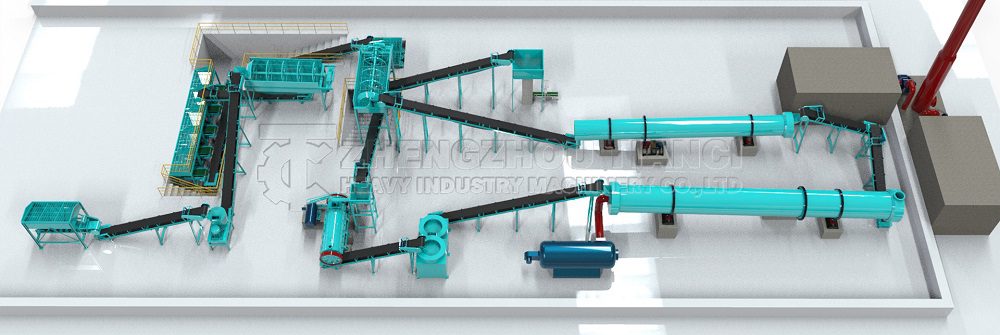
The Journey Begins: Reception and Pre-Treatment
Every morning, trucks dump fresh manure at the reception area. It’s wet—sometimes seventy percent moisture or more—and it’s absolutely not ready for composting. If you piled it as-is, it would turn anaerobic within hours, creating more problems than it solves.
Next comes a pre-crusher. Manure straight from the barn often contains clumps, bedding materials like straw or wood shavings, and the occasional stray object. The cage crusher breaks everything into uniform pieces, ensuring that what follows will process evenly.
Some operations include a mixer at this stage, blending different feedstocks to achieve the perfect carbon-to-nitrogen ratio. Maybe add some crop residue from neighboring farms. Maybe mix in mushroom substrate that’s already served its purpose. The goal is a balanced diet for the microbes that will do the real work.
The Heart of the Operation: Fermentation
This is where the magic happens, and this is also where you have choices. The right fermentation equipment depends on your space, your volume, and your material.
For operations with room to spread out, the large wheel compost turning machine rules supreme. Picture a massive steel frame straddling windrows that stretch longer than football fields. A drum eight feet in diameter, studded with heavy-duty tines, rotates slowly as the machine advances. It lifts material from the depths, flings it into the air, and lays it down again in a fluffy, oxygenated arc.
In a single pass, temperatures soar. Pathogens die. Weed seeds sterilize. The sharp, acrid smell of ammonia fades, replaced by something almost pleasant—earthy, like a forest floor after rain.
For indoor facilities or operations with space constraints, the chain compost turner takes center stage. Running on rails along narrow, deep troughs, it reaches down two meters or more. A continuous loop of heavy-duty chain fitted with steel plates scoops material from the very bottom and lifts it vertically, cascading it back to the top.
From Compost to Product: Fine Processing
Now the material is ready for its next transformation. A front-end loader moves it from windrows or troughs to the processing line.
First stop: a semi-wet material crusher. Even after weeks of turning, some particles remain too large for ideal granulation. The crusher reduces everything to a consistent size, ensuring uniformity in the steps ahead.
Next: a rotary screener machine. Fine material passes through; oversize chunks get diverted back to the crusher for another try. What emerges is a consistent, powdery material—technically usable as fertilizer, but not yet what the market really wants.
The Granulation Revolution
Enter the new type two-in-one organic fertilizer granulator, a machine that has changed the economics of small-to-medium production lines.
Traditional granulators have limitations. Disc granulators produce uneven sizes. Extrusion presses struggle with fibrous material. Rotary drums need perfect conditions to work well.
The two-in-one design takes a different approach. It combines stirring tooth granulation with rotary drum granulation in a single, efficient unit. Material enters the first section, where high-speed rotating mixing knives prepare it for shaping. Then it moves to the second section, where internal mixing teeth complete the granulation while the outer cylinder molds particles into their final form.
The results are remarkable. Granulation rates can exceed well over ninety percent—meaning almost everything that goes in comes out as usable product. The granules are spherical, uniform, and strong enough to handle bagging and transport without crumbling. And crucially, the design handles the fibrous, challenging material that comes from real-world composting—crop residues, bedding materials, all the stuff that makes organic fertilizer organic.