
Three Key Steps to Optimizing Organic Fertilizer Production Line Efficiency
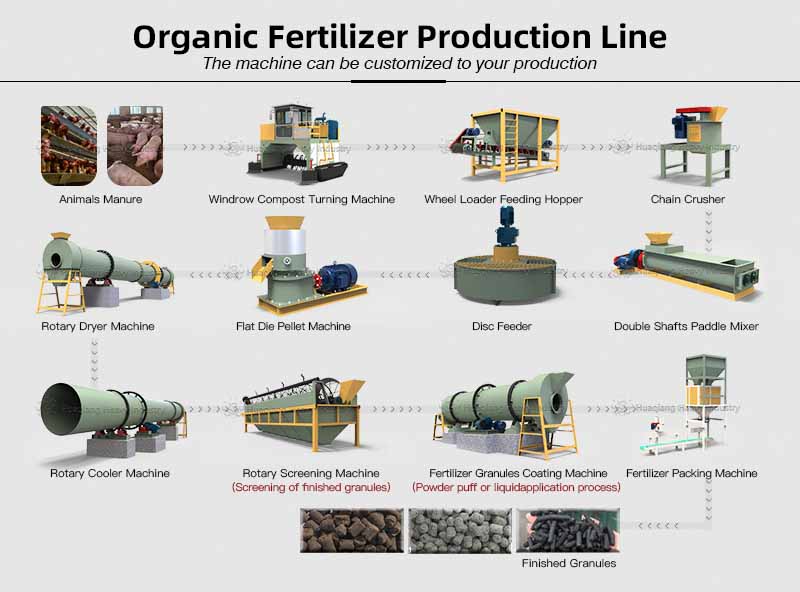
The value of an efficient organic fertilizer production line lies not only in transforming organic waste into valuable products, but also in achieving maximum output at the lowest cost and with the most consistent quality. Many production lines, despite being fully equipped, often face problems such as failing to meet production capacity, poor finished product granule strength, and low qualification rates. These problems often stem not from a single stage, but from a lack of fine-tuning throughout the entire system. This article will focus on three core stages—raw material pretreatment, granulation and molding, and drying and screening—to share a set of systematic parameter optimization techniques to help you overcome production bottlenecks and significantly improve overall efficiency and profitability.
Step 1: Raw Material Pretreatment Optimization – Laying the Foundation for Efficient Granulation
Raw materials are the foundation of production, and their processing quality directly determines the smoothness of all subsequent stages. The core objective of pretreatment is to adjust the fermented raw materials to the “most suitable state for granulation,” which includes appropriate particle size, uniform moisture content, and excellent plasticity.
- Crushing Stage: Particle Size is Key
When using a semi-wet material crusher, the focus is on adjusting the gap between the hammers and the screen, as well as the main shaft speed. Too large a gap or too low a speed will result in insufficient crushing; residual fibers or lumps in the material will form “cores” during granulation, leading to loose and brittle granules. Conversely, over-crushing can lead to excessively fine material and increased bulk density, making it difficult to agglomerate in subsequent granulation. It is recommended to regularly check and adjust the gap to 3-8 millimeters (depending on the fiber content of the material), and ensure that the particle size of the crushed material is controlled to be below 1 millimeter and evenly distributed. Uniform fineness is the first step in ensuring ball formation rate and granule strength.
- Mixing and Conditioning: Moisture and Plasticity are the Soul
In the mixing stage, the core is to ensure absolute uniformity of moisture and binder (if added). The speed and mixing time of the twin-shaft mixer are crucial. Too fast a speed or too short a time will lead to uneven mixing; too slow or too long will result in low efficiency and may compact the material. The key technique is to determine the optimal mixing time through multiple small-scale trials, ensuring the material reaches a critical moisture content state where it can be “formed into a ball by hand but crumbles upon impact” (usually 25%-35%). Furthermore, for raw materials with poor plasticity (such as pure straw), a small amount of non-polluting binder (such as bentonite or lignin sulfonate) can be scientifically added at this stage to significantly improve material plasticity and enhance subsequent granulation efficiency.
Second step: Granulation and molding optimization – precisely controlling the “pelletization rate”
Granulation is the core of the production line, and the pelletization rate directly determines the amount of recycled material and effective production capacity.
For the most commonly used disc granulator, there are “three elements” that need to be adjusted in conjunction:
Disc inclination angle: The inclination angle affects the rolling speed and residence time of the material in the disc. A larger angle results in faster rolling and smaller, more compact particles; a smaller angle results in larger, looser particles. The recommended inclination angle adjustment range is usually between 35-55 degrees, with fine-tuning based on the desired particle size.
Disc rotation speed: The rotation speed works in conjunction with the inclination angle. Increasing the rotation speed increases the number of times the particles roll, improving compactness, but too high a speed will cause the particles to be thrown out of the disc. Observation is needed to find the optimal rotation speed that forms a good “particle rolling layer”.
Liquid spraying position and flow rate: The position of spraying the binder or water should be in the “boiling zone” of the material, and the liquid should be sprayed in a mist and evenly distributed. Flow rate control is a core technique: too low a flow rate results in a low pelletization rate; too high a flow rate will cause the particles to grow rapidly and stick together, forming large lumps. The ideal state is for the material to use small particles as “cores,” gradually growing by being evenly coated with the liquid phase.
For roller extrusion granulators, the core of optimization lies in the balance of “pressure and feeding”. It is essential to ensure that the feeding is uniform, continuous, and fills the width of the pressure rollers. At the same time, the line pressure is precisely adjusted through the hydraulic system. Insufficient pressure will result in loose, fragile particles; excessive pressure may cause equipment overload, increased wear, and excessively hard particles that affect dissolution. Step Three: Drying and Post-Processing Optimization – The Cornerstone of Stable Product Quality
Drying is not simply about removing excess water, but also about fixing the particle shape and preventing nutrient loss.
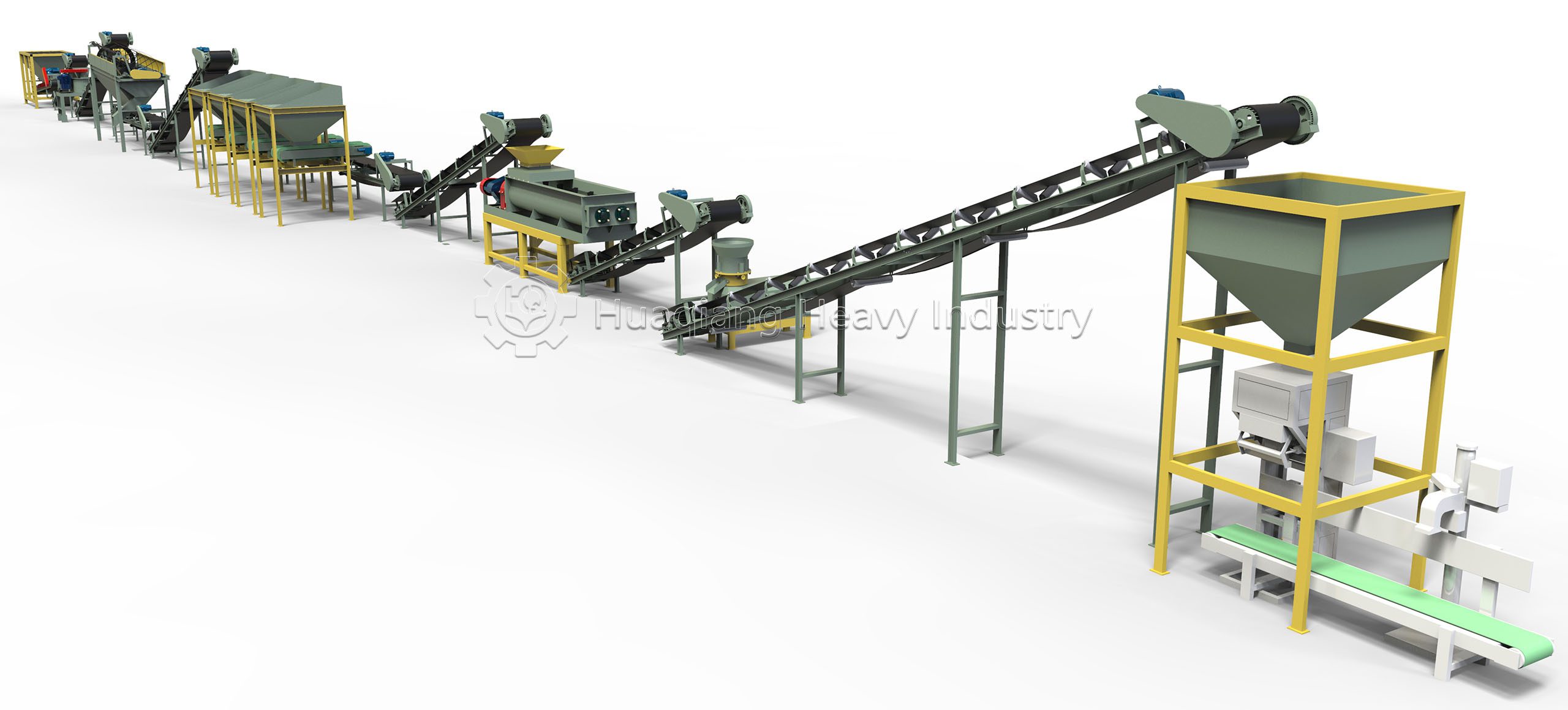
The key to optimizing rotary dryers lies in the precise coordination of the “temperature curve” and “airflow and wind speed.”
Temperature Control: Avoid using excessively high temperatures (such as over 150℃) at the inlet for “rapid drying,” as this will cause the particle surface to harden and form a crust (known as “glazing”), preventing internal moisture from escaping and resulting in “sugar-centered” particles that crumble easily. The scientific approach is to use a “staged heating, low-temperature, high-airflow” strategy, dividing the drying process into several temperature zones, gradually increasing the temperature to ensure even heat transfer from the surface to the core.
Airflow Control: Sufficient airflow can promptly remove evaporated moisture, preventing saturated humid air from circulating inside the drum and reducing drying efficiency. Regular cleaning of the lifting plates and ventilation pipes inside the dryer is essential to ensure sufficient contact between hot air and materials, which is key to improving thermal efficiency and reducing coal consumption.
The dried granules must be cooled to near room temperature before packaging. Otherwise, residual heat will cause moisture migration within the bags, leading to product clumping. Subsequently, efficient multi-layer vibrating sieving can accurately separate qualified products, crush large particles, and return fine powder for reprocessing, forming a closed production loop and maximizing raw material utilization.
Systematic Thinking Brings Multiplicative Benefits
Optimizing production line efficiency is not simply about adjusting one piece of equipment. It is a systematic project involving interconnected parameters from start to finish. From the material state in pretreatment to the granulation rate and the stability of drying, every step is closely linked. It is recommended that managers establish a system for recording key process parameters, standardizing optimal rotation speed, temperature, moisture content, and other data, and providing systematic training to operators. When your production line moves from “functional” to “optimized,” you will find that increased capacity, reduced energy consumption, and a leap in product qualification rate will be natural consequences. This refined management thinking is the core soft power that allows modern organic fertilizer factories to stand out from the competition.
Optimizing the Granulation and Drying Workflow
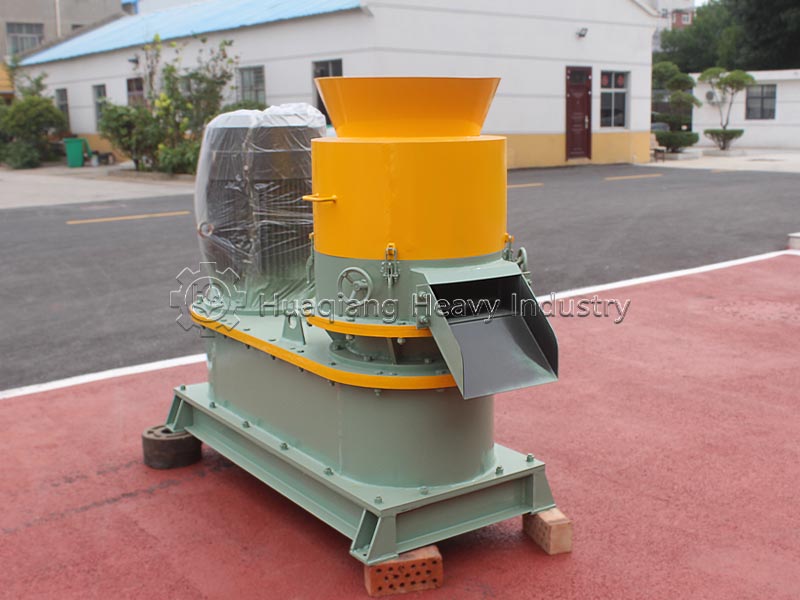
Within a comprehensive organic fertilizer manufacturing system, the organic fertilizer production granulation stage offers multiple pathways requiring distinct optimization. For a dedicated organic fertilizer disc granulation production line, the “three elements” of disc angle, rotation speed, and liquid spray are critical. For facilities using a compact new type two in one organic fertilizer granulator or a new type organic fertilizer granulator, the focus is on the synergy between its crushing and shaping components. For producing high-density cylindrical pellets, a flat die pelleting machine requires precise die selection and pressure adjustment. Following granulation, regardless of the method, the rotary drum dryer is the standard for post-processing. Here, the optimization strategy shifts to the “temperature curve” and airflow management, employing a staged, low-temperature, high-airflow approach to dry granules thoroughly without causing surface hardening or nutrient loss, ensuring the final product’s strength and stability.