
Bio-organic Fertilizer Production Line: Why Does Equipment Investment Require 40% Higher Than Traditional Organic Fertilizer?
Bio-organic fertilizer production lines are significantly more complex than traditional organic fertilizer production lines due to the need for functional microbial inoculation and low-temperature drying preservation processes. The core differences lie in three main modules: sterilization systems, precise inoculation devices, and temperature-controlled drying equipment. This directly leads to a 35%-45% increase in fixed asset investment, but the finished product’s premium can be 2-3 times that of traditional organic fertilizer.
- Process Differences: A Leap from “Composting” to “Functionalization” Traditional organic fertilizer production ends with composting, with the process chain stopping at crushing, screening, and packaging. Bio-organic fertilizer, however, requires secondary bio-activation on top of the composted material: introducing functional microbial communities such as Bacillus subtilis and Bacillus mucilaginosa at an activity concentration of ≥2×10⁸ CFU/g into the substrate. This difference directly reshapes the equipment demand landscape—the “high-temperature composting” advantage of traditional production lines becomes a “microbial killer” for bio-organic fertilizer, necessitating the addition of low-temperature sterilization alternatives and aseptic inoculation environments.
- Equipment Requirements Comparison List: 5 Key Differentiated Stages
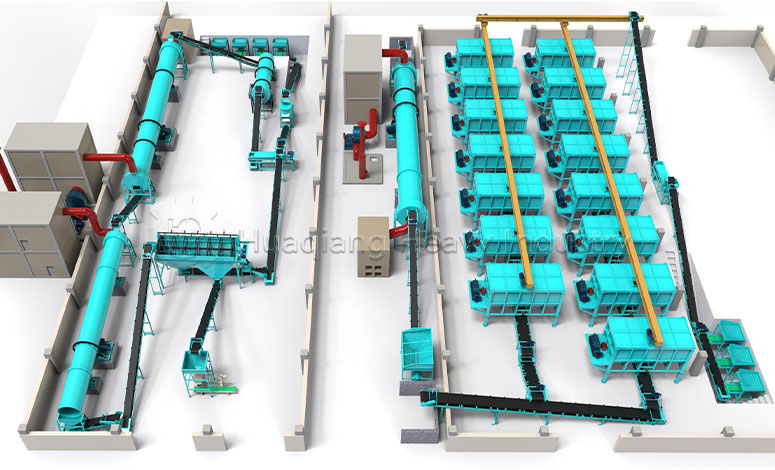
The following is a structured presentation of the core equipment parameters and functional differences between the two types of organic fertilizer production lines:
Pretreatment Stage: Traditional organic fertilizer only requires a straw crusher (screen mesh size ≤10mm); bio-organic fertilizer requires an additional magnetic separator for impurities and a heavy metal chelation pretreatment tank to prevent functional bacteria from being interfered with by inhibitors.
Fermentation Stage: Traditional production lines rely on a trough-type compost turner (turning depth 1.0-1.5m); bio-organic fertilizer requires a membrane-covered aerobic fermentation system to ensure the fermentation endpoint temperature is ≤45℃ to protect the subsequent colonization environment of the inoculated microorganisms.
Sterilization Stage: Traditional organic fertilizer does not have this step; bio-organic fertilizer must be equipped with a pasteurization tunnel (60-70℃ maintained for 2 hours) or a UV-ozone combined sterilization chamber to kill competing microbial populations in the material.
Inoculation Stage: Traditional organic fertilizers do not have this step; the core equipment for bio-organic fertilizers is an airflow atomizing inoculator (atomized particle size ≤50μm, bacterial solution uniformity CV value <5%), ensuring that functional bacteria are dispersed at single points in the substrate rather than clumping and becoming inactive.
Drying Stage: Traditional organic fertilizers use a drum dryer (inlet air temperature 300-400℃, moisture content reduced to ≤20%); bio-organic fertilizers must use a low-temperature belt dryer (inlet air temperature ≤60℃, moisture content precisely controlled at 25%-30%) to avoid inactivation of functional bacteria due to high temperatures (Bacillus’s tolerance limit is 65℃/30 minutes).
- Return on Investment: The Economic Logic Behind High Equipment Investment
Taking a production line with an annual output of 10,000 tons as an example, the equipment investment for traditional organic fertilizers is approximately 800,000-1,000,000 yuan, while that for bio-organic fertilizers requires 1,200,000-1,450,000 yuan. However, the market price of bio-organic fertilizer is typically 800-1200 yuan/ton, a premium of 160%-140% compared to traditional organic fertilizer (300-500 yuan/ton). Based on a 5-year depreciation period for equipment, the payback period for bio-organic fertilizer production lines can be shortened to 14-18 months, significantly better than the 22-28 months for traditional production lines.
The shift from traditional organic fertilizer to bio-organic fertilizer represents a fundamental process upgrade—from simple composting to functional microbial activation. This directly reshapes the equipment landscape, requiring additional modules for sterilization, precise inoculation, and low-temperature drying. While bio-organic lines have 35%-45% higher fixed asset investment, the finished product can command a 2-3x price premium, with payback periods shortened to 14-18 months (vs. 22-28 months for traditional lines).
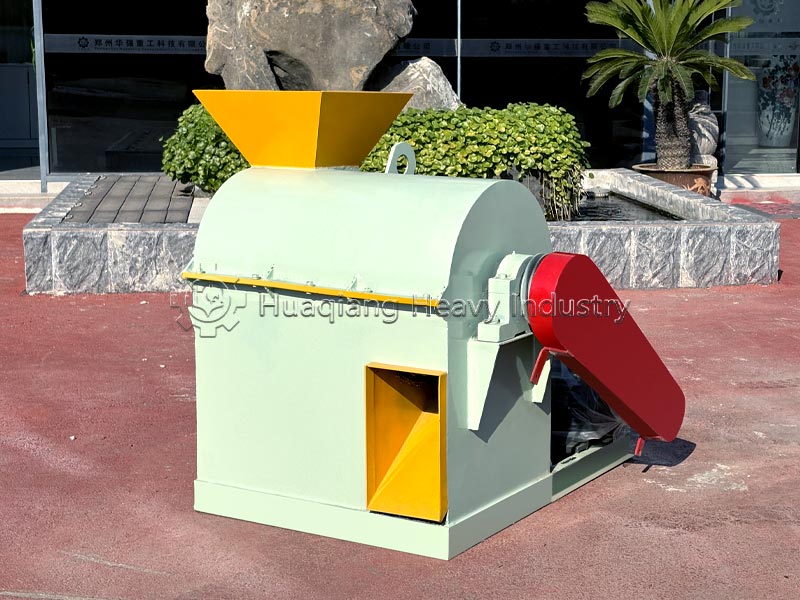
Beyond the fermentation and sterilization stages, the granulation step is equally critical. A new type organic fertilizer granulator (wet continuous granulation) is often preferred for bio-organic fertilizer due to its low-temperature operation, preserving microbial activity. In an organic fertilizer disc granulation production line, a disc granulator offers gentle rolling, while a half-wet material crusher machine prepares the feedstock. Together, this organic fertilizer production equipment and organic fertilizer raw material processing equipment form a complete organic fertilizer granulator series for a bio organic fertilizer production line. The key is to integrate these specialized modules—from membrane-covered fermentation to low-temperature belt drying—to protect functional bacteria and unlock the premium margins of bio-organic fertilizer.
- FAQ (Frequently Asked Questions)
Q1: Can traditional organic fertilizer production lines be easily modified to produce bio-organic fertilizer?
Some steps can be reused (such as crushing, screening, and packaging), but the three major modules at the end of fermentation—sterilization, inoculation, and low-temperature drying—require new specialized equipment. The modification cost is approximately 60%-70% of that of a newly built bio-organic fertilizer production line, and production capacity is usually limited by the existing production line layout.
Q2: Is secondary fermentation required after inoculation with functional bacteria?
Traditional “high-temperature fermentation” is not required, but a microbial inoculation chamber (temperature 28-32℃, humidity 60%-65%, static for 48-72 hours) is necessary to allow the functional bacteria to complete initial colonization in the substrate. This step requires extremely high uniformity of ventilation within the chamber.
Q3: Will low-temperature drying lead to excessive moisture content in the finished product and a shortened shelf life?
When the moisture content of the finished bio-organic fertilizer is controlled at 25%-30%, with vacuum packaging or moisture-proof packaging lined with PE film, the shelf life at room temperature can reach 12-18 months. If the moisture content is below 20%, it will cause the functional bacteria to enter a dormant state too deeply, delaying their recovery after application to the soil and affecting the fertilizer’s effectiveness.