
High-quality organic fertilizer granules: Meeting the 2026 procurement standards of 15N hardness and 30% organic matter content.
In short: High-quality organic fertilizer granules must meet two parallel requirements by 2026: first, the mandatory agricultural industry standard NY/T 525-2021 (organic matter content ≥30%, moisture content ≤30%, pH value 5.5-8.5, heavy metal content limit); second, physical durability benchmarks, namely compressive strength ≥15 Newtons and particle size ≥90%. Products that simultaneously meet the chemical and mechanical performance requirements are eligible to participate in government procurement tenders and receive a premium; particle hardness directly determines the resistance to caking during storage and the uniform release of nutrients in the field.
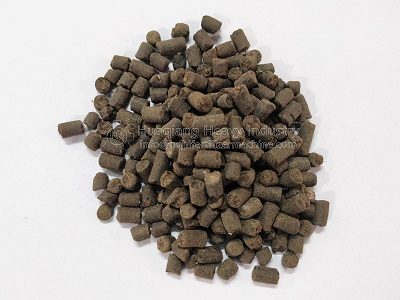
A dual regulatory framework governs the quality of organic fertilizers. The quality is governed by the national standard NY/T 525-2021, which specifies benchmark values for organic matter content (dry basis ≥30%), total nutrient content (including nitrogen, phosphorus, and potassium, dry basis ≥4.0%), moisture content (fresh sample ≤30%), pH range (5.5-8.5), and germination rate (≥70%). These parameters are clearly stipulated in Chinese government procurement contracts, and suppliers must provide third-party testing to prove compliance with the standards before delivering thousands of tons of product to high-standard farmland projects.
Simultaneously, the national standard JB/T 10907-2010, which specifies performance standards for granulation equipment, defines mechanical quality thresholds: granulation rate ≥90%, particle size uniformity (3.5-5.5mm particle size percentage ≥95%), and single-particle compressive strength ≥15 Newtons. These physical performance indicators are crucial because fragile granules generate fine powder during transportation or bagging. This powder absorbs moisture and causes crystal bridges to clump—the same thermodynamic mechanism that plagues NPK compound fertilizers.
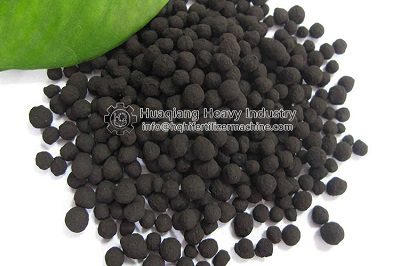
Physical Integrity: 15 Newton Threshold
Particle hardness testing uses a universal testing machine to apply compressive force to individual granules until they break. The minimum threshold of 15 Newtons is not arbitrarily set; it represents the static load that a 25 kg bag stacked eight times at the bottom can withstand during warehouse storage. Particles below this threshold break down into powder, creating contact points between particles, and capillary coagulation can cause clumping. For manufacturers targeting the high-end market, specifying equipment capable of producing mechanically interlocked granules—such as systems conforming to high-pressure roller granulator specifications—can achieve granule compressive strength values of 20-30 Newtons, far exceeding the regulatory minimum.
Chemical Quality Parameters Determining Procurement Qualification
The 2026 government procurement policy mandates six chemical restrictions:
Organic matter content ≥30% (dry weight): This indicator distinguishes between functional organic amendments and inert fillers. Composted manure that undergoes high-temperature fermentation at 55-70°C typically has an organic matter content exceeding 45%, far higher than the standard value.
Total nitrogen, phosphorus, and potassium (NPK) content ≥4.0%: Although this content may seem low compared to compound fertilizers, it reflects the slow-release characteristics of organic fertilizers. High-quality fermented manure typically provides 5-7% of total nutrients without the addition of synthetic fortifiers.
Moisture content ≤30%: Excessive moisture not only dilutes nutrient concentration but also promotes microbial activity, thereby increasing compost temperature and accelerating clumping.
pH value 5.5-8.5: This range ensures compatibility with various soil types and does not lead to rhizosphere acidification or alkalization.
Heavy metal limits: Arsenic ≤15 mg/kg, Mercury ≤2 mg/kg, Lead ≤50 mg/kg, Cadmium ≤3 mg/kg, Chromium ≤150 mg/kg. These trace element limits prevent soil pollution caused by substandard raw materials.
Hygiene indicators: Fecal coliforms ≤100 CFU/g, Ascaris egg mortality ≥95%, confirming complete inactivation of pathogens during fermentation.
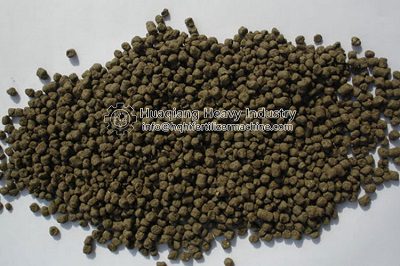
The 2026 standard for high-quality organic fertilizer granules combines chemical quality conforming to NY/T 525-2021 with mechanical durability conforming to industry granulation specifications. Manufacturers using high-temperature aerobic fermentation and high-pressure granulation processes can consistently achieve an organic matter content benchmark of ≥30% and a hardness threshold of 15 Newtons, thus qualifying their products for government premium procurement contracts while eliminating post-production clumping issues and avoiding damage to customer confidence.
Building a Compliant Production Ecosystem from Feedstock to Finished Granule
Achieving dual compliance with NY/T 525-2021 chemistry and JB/T 10907-2010 mechanical durability demands a holistic approach to organic fertilizer production equipment selection. The quality pipeline begins with robust organic fertilizer raw material processing equipment: a high-torque half-wet material crusher machine shreds composted manure to uniform particle size, ensuring consistent carbon-to-nitrogen ratios and eliminating oversized clods that would compromise granule density. This pre-processing stage feeds directly into a controlled organic fertilizer fermentation process operating at 55-70°C for 5-7 days, driving organic matter above 45% while inactivating pathogens to meet hygiene thresholds. For granulation, manufacturers should deploy a new type organic fertilizer granulator engineered for high-pressure compaction, producing angular, interlocked particles with crushing strength reaching 20-30 Newtons—well beyond the 15-Newton procurement minimum. Alternatively, an organic fertilizer disc granulation production line offers excellent sphericity and size uniformity for applications where controlled nutrient release and visual aesthetics drive market premium. Integrating these machines within a cohesive organic fertilizer granulator series architecture—from raw material crushing through fermentation conditioning to final pelletizing—ensures every batch simultaneously satisfies chemical, mechanical, and microbiological benchmarks. The manufacturers that engineer this end-to-end capability will not only secure government tender eligibility but also command price premiums in an increasingly quality-discerning agricultural marketplace.