
Automated Batching Systems: The Inevitable Path to Large-Scale Organic Fertilizer Production
In the process of organic fertilizer production transitioning from small-scale workshops to large-scale industrial production, automated batching systems have transformed from a “nice-to-have” feature into an “indispensable” core piece of equipment. Traditional manual batching methods are being pushed to their limits by ever-increasing production capacity, increasingly stringent quality standards, and ever-higher environmental requirements. The necessity of automated batching systems in large-scale production is analyzed from three dimensions: reducing human error, ensuring batch stability, and data traceability.
Reducing Human Error: From “Experience-Based Operation” to “Precision Control”
In traditional organic fertilizer production, manual weighing and manual feeding are the main methods, but this model has inherent flaws: manual operation is not only easily affected by differences in experience and fatigue, leading to deviations in proportions and nutrient imbalances, but it is also labor-intensive, inefficient, and generates a lot of dust.
Automated batching systems fundamentally change this situation. Through high-precision sensors and intelligent weighing instruments, it monitors material weight changes in real time, controlling dynamic errors within ±0.2% to ±0.5%. In actual production, the system can accurately measure all materials, including livestock manure, crop straw, and various additives. In contrast, manual batching often has an error rate of 2%-5% or even higher—over-mixing of certain elements not only wastes raw materials but can also lead to crop poisoning and reduced yields.

From an investment return perspective, the effect is equally significant. For example, after introducing an automated batching system, an organic fertilizer plant reduced the batching work from three people to just one, saving 15,000 yuan in labor costs per month; the raw material loss rate decreased from 8% to 2%, saving over 30,000 yuan in raw material costs per month. Statistics show that automated batching can increase raw material utilization by 15%-25% and reduce overall labor costs by more than 30%.
Batch Stability Guarantee: From “Batch Fluctuations” to “Consistency” The consistency of organic fertilizer products directly determines market competitiveness. Under traditional manual batching, the nutrient content and organic matter ratio of products produced by different shifts and operators often fluctuate significantly. This instability is amplified in large-scale production—a single batch of substandard products can cause the entire production line to shut down and require rework.
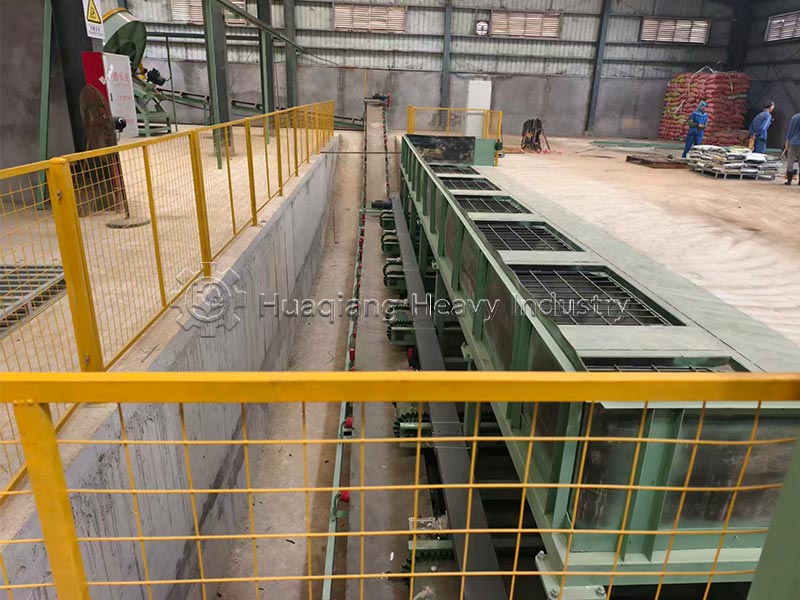
Automatic batching systems achieve closed-loop regulation of the feeding process through PLC or DCS control systems. Operators only need to input formula parameters on a touchscreen, and the system automatically completes the batching process for various raw materials. The system can store hundreds of formulas, which can be quickly recalled for different crops and soil requirements. More importantly, the automated batching system can precisely control the amount of each raw material added, ensuring consistency in the formula of each batch of products and making the nutrient content, moisture, particle size, and other indicators of different batches highly stable. This stability is a core threshold for large-scale planting bases and high-end market procurement.
III. Data Traceability: From “No Data to Trace” to “Complete Closed-Loop”
Under large-scale production and quality certification systems, data traceability is no longer an option but a necessity. Organic fertilizer production standards such as NY/T 525-2021 have clear requirements for batch traceability. Under the traditional manual batching model, batch data is scattered and incomplete, making it difficult to quickly locate the cause once a quality problem occurs.
The automated batching system is not an isolated piece of equipment—it is the intelligent starting point of a fully integrated organic fertilizer manufacturing plant. From the arrival of raw materials, animal manure processing machine and chicken manure fertilizer machine prepare the feedstock, while the automatic organic fertilizer batching system precisely weighs and proportions every component, ensuring nutrient consistency and eliminating human error. This precision directly feeds into the downstream organic fertilizer granulator series, where a disc granulator machine or other granulator machine for organic fertilizer shapes the homogenous mix into uniform pellets. After granulation, a fertilizer drying and cooling machine stabilizes moisture and temperature, preserving granule strength and preventing caking. Every piece of organic fertilizer machine in the line—from mixers to dryers—relies on the batching system’s accurate data to operate at peak efficiency. The result is a seamless production train that delivers consistent, high‑quality organic fertilizer batch after batch, with full traceability and minimal waste. For large‑scale producers, investing in an automated batching system is not just an upgrade—it is the essential first step toward industrial‑scale efficiency, product reliability, and long‑term competitiveness in the organic fertilizer market.
Automatic batching systems have completely changed this situation. The system automatically generates batch records for ingredients, including information such as time, weight, and operator. Simultaneously, the data is synchronized to a cloud platform, supporting remote viewing of historical records and trend analysis. From raw material batches to finished product batches, the system achieves closed-loop data management throughout the entire process. When quality traceability is required, simply retrieving system records allows for quick identification of problematic batches and processes—this is not only a compliance requirement but also a core manifestation of an enterprise’s quality management capabilities.