
【FAQ】Fertilizer Machinery and Equipment Technology – What are the differences between horizontal and vertical crushers?
What are the differences between horizontal and vertical crushers?
Horizontal and vertical crushers are the two most common types of crushing equipment in fertilizer production. They differ significantly in structure, processing capacity, applicable materials, and site requirements. Generally speaking, horizontal crushers have a larger processing capacity and are suitable for materials with high moisture content and high coarse fiber content; vertical crushers have a smaller footprint and are more suitable for dry production or crushing materials with higher fineness requirements.
Differences in Structure and Working Principle: A horizontal crusher has a dual-rotor structure with a horizontally placed body. The main working component is a rotor with a steel ring chain. After the material enters the crushing chamber evenly, it is impacted, sheared, and torn by the high-speed rotating hammers, ultimately crushed to the required particle size and discharged through a screen plate. A vertical crusher has a single-rotor structure with a vertically arranged main shaft. The material is fed from the top feed inlet and falls under its own weight, being repeatedly struck and ground by multiple layers of hammers during its descent.Differences in Processing Capacity and Applicable Scale: Horizontal crushers have a large feed opening and large chamber volume, with an hourly output of 5-15 tons, suitable for continuous large-scale operations in large and medium-sized bio-organic fertilizer production lines. Vertical crushers have a relatively smaller processing capacity, generally 1-5 tons per hour, making them more suitable for small and medium-sized organic fertilizer plants or workshops with limited space.
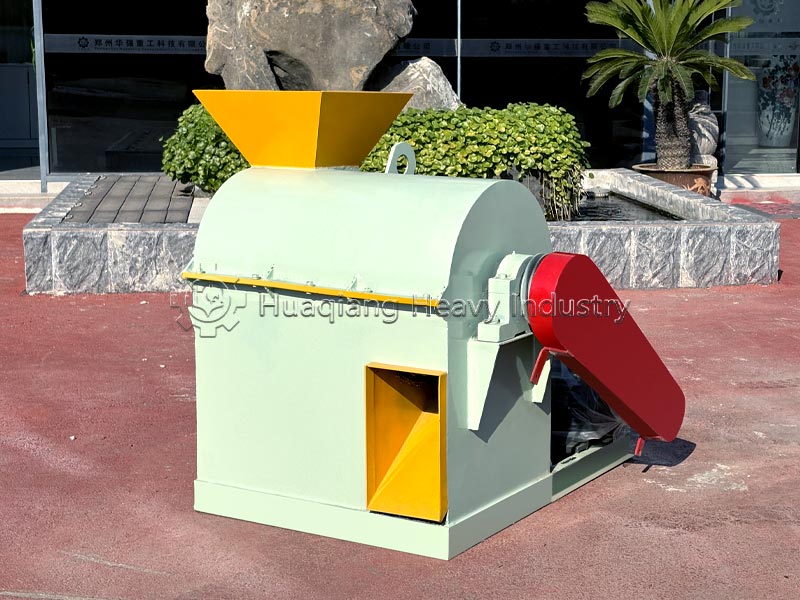
Adaptability to Material Moisture Content and Fiber Content: Horizontal crushers are more adaptable to materials with high moisture content, especially adept at shearing and crushing coarse fibrous materials such as straw, with less stringent requirements for feed particle size. Vertical crushers use multi-layer hammers for layer-by-layer crushing, resulting in finer and more uniform output particles and better finished product fineness, which is beneficial for subsequent fine granulation processes.
Site Occupancy and Maintenance Convenience: Vertical crushers have a compact structure and a small footprint, approximately half that of horizontal crushers, with lower energy consumption and less dust. Horizontal crushers have a larger footprint and are heavier, but offer greater operational stability and are suitable for open workshops and environments. In terms of maintenance, horizontal crushers have externally mounted bearings and large access doors, making it easier to replace hammers and clean the crushing chamber.
| Comparison Item | Horizontal Crusher | Vertical Crusher |
|---|---|---|
| Rotor Structure | Double‑rotor | Single‑rotor |
| Processing Capacity | 5‑15 tons/h | 1‑5 tons/h |
| Applicable Scale | Large & medium‑sized production lines | Small & medium‑sized production lines |
| Material Adaptability | High moisture content, coarse fiber materials | High fine‑crushing requirement, moderate moisture |
| Floor Space | Large | Small (about 1/2 of horizontal type) |
| Maintenance Convenience | Easy inspection & maintenance | Compact structure, slightly complex maintenance |
When actually selecting a model, it is recommended to make a comprehensive judgment based on production scale, raw material characteristics (moisture content, fiber content), finished product fineness requirements, and workshop space conditions: choose a horizontal crusher for high-moisture, coarse fiber, and large-scale production; choose a vertical crusher for fine, uniform crushing and limited space.
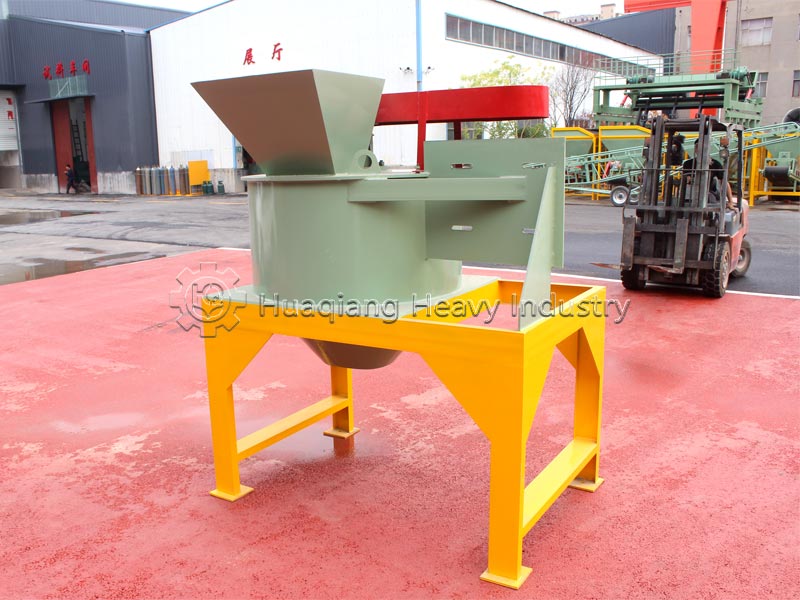
Choosing between horizontal crushers and vertical disc crushers is not merely a matter of preference — it must align with the entire upstream and downstream process. After the organic fertilizer fermentation process, the composted material often contains coarse fibres and variable moisture, making a horizontal crusher the preferred choice for high‑throughput, wet‑feed applications. For finer, more uniform output required by subsequent granulation, a vertical disc crusher offers compact footprint and precise particle control. Both types integrate seamlessly into a full‑scale commercial organic fertilizer production line, and when paired with an organic fertilizer disc granulation production line, they ensure consistent feedstock quality for high‑sphericity granules. Ultimately, the right crusher selection optimises energy use, reduces maintenance, and guarantees that the final product meets strict quality standards — making it a critical decision for any modern organic fertiliser plant.