
【FAQ】Fertilizer Production Process and Flow
What Moisture Content Should Be Controlled After Mixing Organic Fertilizer Raw Materials?
The recommended moisture content of organic fertilizer raw materials during the mixing and batching stage is between 30% and 40%. This range is considered a “golden zone” based on long-term practical experience in organic fertilizer production – it ensures both the granulation rate and particle strength in subsequent granulation processes, guarantees energy efficiency in the drying stage, and effectively prevents material from agglomerating in equipment and silos.
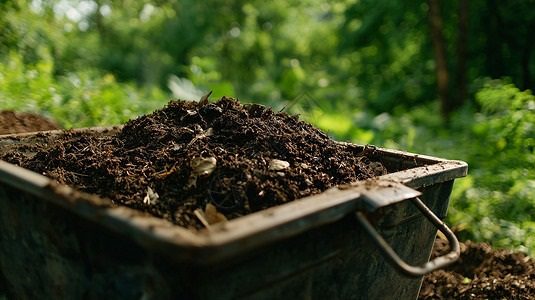
Why Does Excessive Moisture Lead to Agglomeration?
When the moisture content of the mixed materials exceeds 40%, the following problems arise: Granulation Loss: Excessive moisture drastically increases the liquid bridging force between powder particles, causing fine particles to rapidly agglomerate within a very short time. The material in the granulator grows in a “snowballing” manner, producing a large number of oversized particles, resulting in a decrease in the granulation rate.
Severe Material Adhesion: High-moisture materials adhere extensively to the inner walls of the mixer, the granulation disc, the conveyor belt, and the screen surface, forming a thick “wet lining.” This can reduce equipment efficiency or, in severe cases, clog screens and jam moving parts.
Surge in Drying Energy Consumption: For every 1% increase in moisture content, drying heat consumption increases by approximately 5%–8%. Materials with a moisture content exceeding 40% require longer drying residence times and higher hot air temperatures, increasing fuel costs and potentially damaging the activity of organic matter due to high temperatures.
Risk of Storage Agglomeration: Even if dried, particles with high residual moisture content will re-agglomerate after packaging due to internal moisture migration.
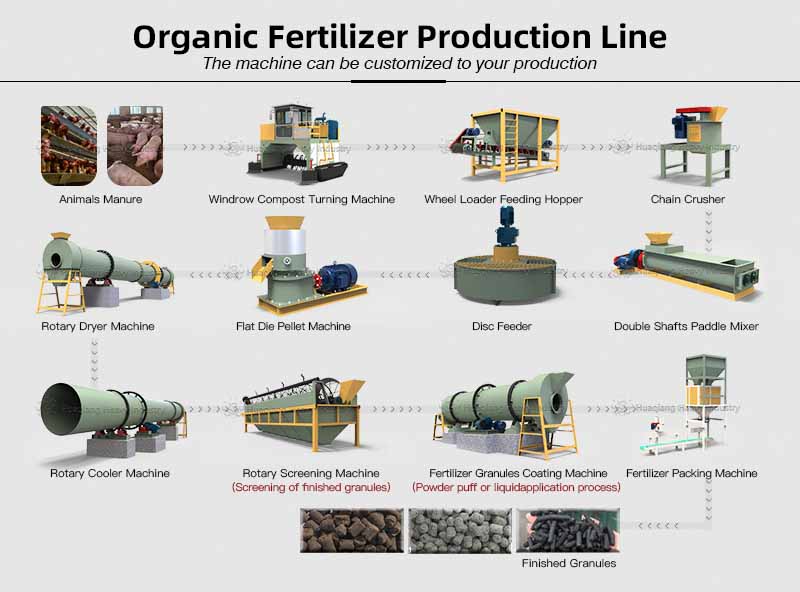
Why is Excessively Low Moisture Content Also Undesirable?
When the moisture content of the mixed materials is below 30%, the capillary forces and adhesive forces between particles are insufficient, making it difficult for the material to agglomerate and nucleate. Most of the powder is discharged directly from the granulator, with a granulation rate potentially as low as 40%–50%, while simultaneously generating a large amount of dust, deteriorating the workshop environment.
Moisture Adjustment Strategies for Different Raw Materials
| Raw Material Type | Typical Initial Moisture Content | Adjustment Measures |
|---|---|---|
| Fresh Livestock & Poultry Manure | 60%~80% | Need to add dry materials (straw powder, rice husk, etc.) or pre-dewatering |
| Decomposed & Fermented Material | 35%~45% | Slight adjustment, appropriate wetting or addition of returned material |
| Dry Powder Material (e.g. Lignite) | 10%~15% | Need to add water or wet material for mixing and batching |
| Municipal Sewage Sludge | 70%~85% | Must add a large amount of dry conditioning agent |
Practical Methods for Moisture Control In production, it is recommended to use a rapid moisture meter to monitor the moisture content of the material at the mixer outlet online, sampling 3-5 times per batch. When the moisture content is too high, dry powder return material (screened fine powder) or dry auxiliary materials can be added to absorb excess moisture; when the moisture content is too low, moisture or steam can be evenly replenished through a misting spray system. Through closed-loop feedback regulation, ensure that the moisture content of the mixture is stable within the ideal window of 30%-40%.
In summary, moisture control of 30%-40% is the “lifeline” of the organic fertilizer granulation process. Too high a moisture content results in stickiness, while too low a moisture content results in dispersion. Only by accurately locking in this range can multiple benefits such as high granulation rate, low energy consumption, and stable quality be achieved.