
Sudden Drop in Pelletizing Rate and Surge in Return Material?
A sudden drop in pelletizing rate and a surge in return material should be investigated in the following order: Raw Material Moisture → Raw Material Fineness → Spraying Status → Disc/Drum Parameters → Scraper Status. A sudden surge in return material usually indicates a change in raw material batch or nozzle blockage, rather than a main unit malfunction. In this situation, do not blindly disassemble the main unit or adjust the motor. Instead, check “from the outside in” along the material flow and water supply system; this often allows you to pinpoint the problem within tens of minutes.
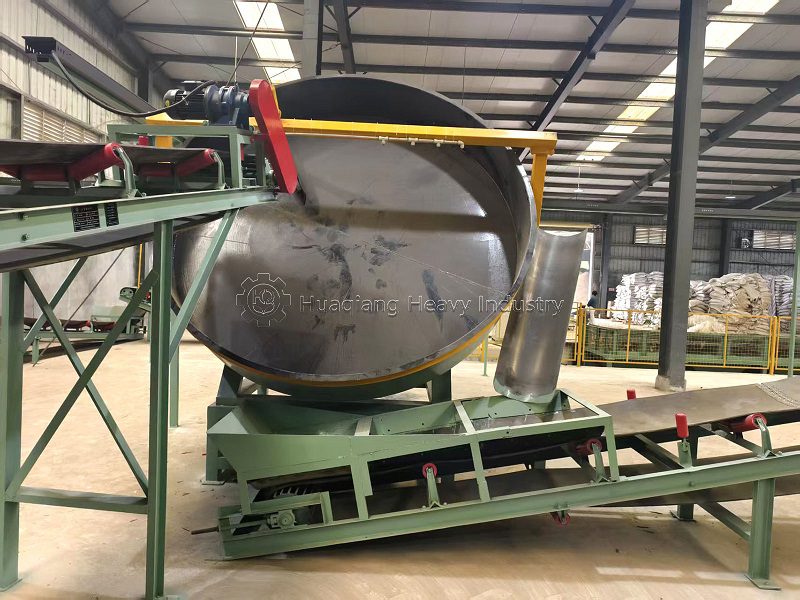
I. Five-Step Troubleshooting Flowchart
Step 1: Check Raw Material Moisture. This is the most volatile and easily overlooked variable. If the material suddenly becomes dry, there is a lack of liquid bridges between the particles, preventing them from rolling into pellets; if the moisture content suddenly increases, the material becomes sticky and quickly rolls into irregular, large clumps. Use a rapid moisture meter to measure the moisture content entering the machine. If it deviates from the standard window (e.g., 25%-35% for disc granulation), immediately adjust it by adding water or mixing in dry material.
Step 2: Check Raw Material Fineness. If the screen of the upstream crusher is damaged, a large amount of coarse particles will mix into the granulator, causing a sharp drop in the pelletizing rate. Take a handful of material and sieve it; if the proportion of particles larger than 2mm suddenly spikes, it indicates a problem in the crushing section, and the machine needs to be stopped and the screen replaced.
Step 3: Check the spray status. Check if the water pressure gauge is stable and observe whether the nozzles are spraying a “water mist” or a “water jet.” If extreme phenomena such as localized mud formation or localized dry powder flying occur, it can be basically determined that the nozzles are blocked.
Step 4: Check the disc/drum parameters. Check if the disc tilt angle or drum speed has shifted due to loose anchor bolts. A tilt angle that is too small will cause the material to stay for too long, resulting in oversized particles; a tilt angle that is too large will result in insufficient material retention and a decreased pelletizing rate.
Step 5: Check the scraper status. If the scraper at the bottom of the disc is worn down or jammed, a thick layer of material will accumulate at the bottom of the disc, changing the effective friction coefficient of the disc surface, causing the material to slip and preventing normal material flow.
II. Identification Signals of Nozzle Clogging/Poor Atomization
Nozzle clogging is the primary culprit for a surge in return material. The identification signals are very direct: observe the material flow; a normal disc surface should be uniformly moistened and tumbling, while clogging results in uneven material moisture distribution; listen to the sound; normal high-pressure water mist produces a uniform and fine sound, while clogging causes abnormal pump noise and a spike in pressure gauge readings; observe the particles; poor atomization causes water droplets to directly impact the disc surface, forming large localized spheres surrounded by dry powder. The solution is simple: stop the machine, remove the nozzles, backflush them with clean water, or clean the internal filter with a soft brush. Never use a hard steel wire to poke the nozzles, as this can damage the angle of the atomizing holes.
III. The Amplifying Effect of Return Material Rate on Drying Energy Consumption
A surge in return material not only causes problems in the granulation section, but it also drives up energy consumption in downstream processes like a domino effect. Assuming the finished product output remains constant, a return material rate that jumps from the normal 20% to 40% means the dryer will have to consume an additional 1/4 of the finished product’s wet material per hour. This excess moisture must be vaporized in the dryer, directly resulting in a linear increase in natural gas or biomass fuel consumption. Furthermore, increased circulating load can overload the screening machine and elevator, wasting the entire production capacity. Controlling the return rate is essentially controlling the energy cost per ton of fertilizer.
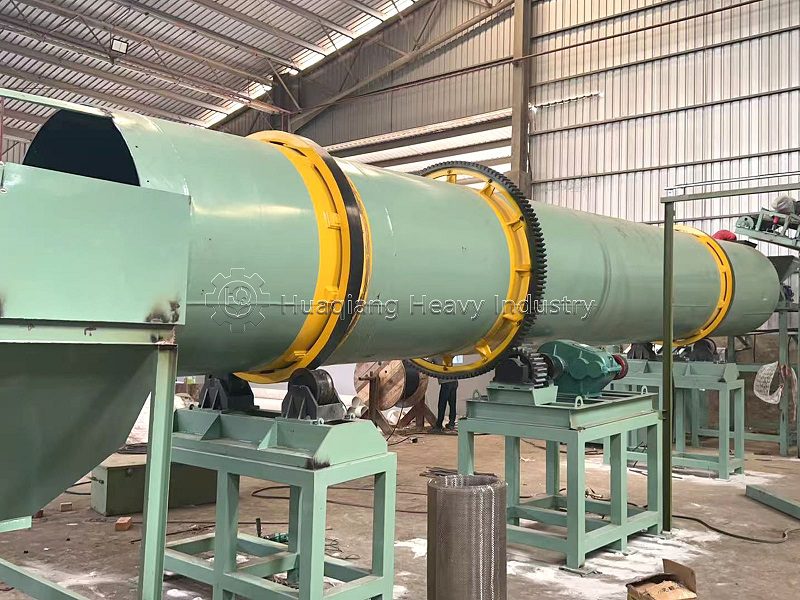
IV. FAQ: Can all returned material be directly reused?
Q: Given the surge in returned material, can all the screened waste be directly poured back into the pelletizer to re-pelletize?
A: It cannot be simply reused “all and directly.” Returned material contains both fine powder and broken coarse lumps. Too much fine powder will disrupt the material flow in the pan, causing the material to “slippery and not roll”; too many coarse lumps will make it difficult to re-pelletize in a short time. The correct approach is to evenly mix the returned material into the new material at a stable ratio of 20%-30%; if the returned material clumps, it must be processed by a crusher before reuse. In addition, the moisture content of the reused material must be close to that of the new material; otherwise, it will disrupt the original moisture balance within the pelletizer, further worsening the pelletizing rate. A decrease in pelletizing rate and a surge in return material are “early warning signals” from the system to the operator. Troubleshooting by addressing moisture content, fineness, spraying, parameters, and scraper issues not only allows for rapid production recovery but also prevents chain reactions of losses caused by blind adjustments. Remember, the core of a pelletizer is the “material flow”; any variable that disrupts the stable material flow will be relentlessly amplified in the return material rate.
V. Extending the Five-Step Check to Different Granulator Types and Production Processes
The same outside-in troubleshooting order applies to different granulator configurations. On an organic fertilizer disc granulator, moisture, disc tilt angle, and scraper condition are the most sensitive variables; on a rotary drum granulator , drum speed, filling rate, nozzle atomization, and internal build-up should be checked in the same sequence. In any organic fertilizer granule production process, the five-step check should be written into the shift checklist: moisture and fineness at the feed, spray status at the nozzle, disc/drum parameters at the anchor bolts, and scraper or drum internals at the discharge end. For a stable organic fertilizer granule production process, the key is not to change the order when the equipment type changes, but to record the baseline values for each machine so that a sudden drop in pelletizing rate can be traced to the same five variables.