
How to Choose Organic Fertilizer Granulation Equipment?
The core difference in choosing organic fertilizer granulation equipment lies between disc granulators and roller granulators. Disc granulators achieve a granulation rate of 80%–90% and produce well-spherical particles, but require a drying process. Roller granulators, being a dry extrusion method, do not require drying and consume 30%–50% less energy than the disc-plus-drying combination, producing irregular cylindrical or flattened round particles. If you prioritize aesthetically pleasing particles, choose disc granulators; if you prioritize lower operating costs, choose roller granulators.
I. Core Differences Between Disc Granulation and Roller Granulation
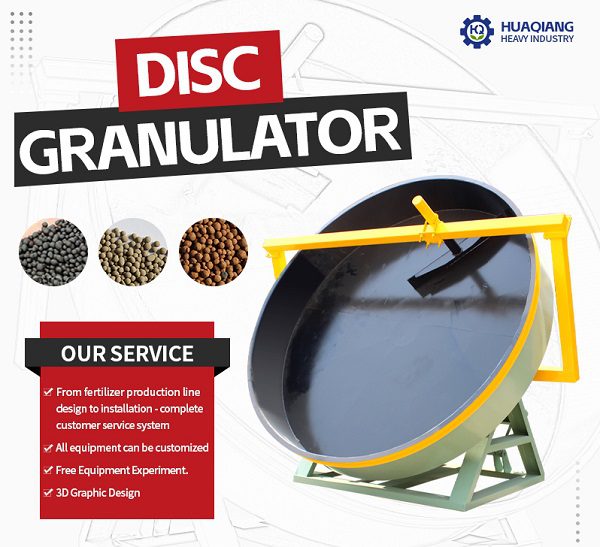
From a forming principle perspective, disc granulators use a wet rolling process. Material is layered and formed into spheres within an inclined disc under friction and centrifugal force, achieving a granulation rate of 80%–90%, with high-quality models exceeding 90%, and a particle sphericity of at least 0.8. Roller granulators, on the other hand, use a dry mechanical extrusion process. Powder is directly pressed into shape by double rollers under high pressure, resulting in high-density particles, but with irregular cylindrical or flattened round shapes.
From an energy consumption perspective, the differences are even more crucial. The energy consumption of the granulation section in disc granulation is approximately 1.2–1.8 kW·h per ton of fertilizer. However, the high moisture content of the granules after wet pelletizing necessitates drying, which is the largest single energy consumption item in the granulation section — for a line with a production capacity of 5 tons per hour, drying energy consumption can exceed 50 kW. Roller granulation, including the extrusion system, consumes approximately 8–15 kWh per ton of fertilizer, but eliminates the need for drying, saving the entire thermal process. Comparing the two, the roller granulation route is 30%–50% lower in energy consumption than the disc granulation plus drying combination. It is important to emphasize that the energy-saving advantage of roller granulation does not come from the extruder itself, but from the structural difference of “eliminating drying” in the process route.
Furthermore, disc granulation can use less or no binder, while roller granulation requires no binder at all. The energy consumption of the granulation stage typically accounts for 40%–60% of the total energy consumption of an organic fertilizer granulation production line; therefore, it is essential not to only consider individual machine parameters when selecting a model.
II. Fermentation and Granulation Are a Continuous Decision Chain and Cannot Be Selected Separately
The selection of organic fertilizer granulation equipment is not an isolated “granulator selection,” but a joint decision involving fermentation and granulation methods. A typical granular organic fertilizer process flow is: raw material fermentation, ingredient mixing, crushing, granulation, drying, cooling, screening, and metering/packaging.
The parameters of the fermentation stage directly affect the options available for the granulation stage. The fermentation cycle is typically 7–10 days, with turning every 1–2 days during this period; the moisture content at the end of fermentation is usually controlled at 30%–40%, meaning that no water overflows when the material is squeezed tightly by hand. If the moisture content of the material after fermentation is high, additional drying is required before entering the disc granulator. Roller granulation, on the other hand, has a higher tolerance for moisture content and can handle fermented materials with slightly higher moisture content, thus skipping or shortening the drying stage. Therefore, before asking “disc granulation or roller granulation,” it is necessary to first confirm the stable moisture range of the fermentation output. The more stable the fermentation moisture control, the more predictable the energy-saving benefits of the roller granulation route.
III. The Role of Fermentation Turning in Granulation Decisions
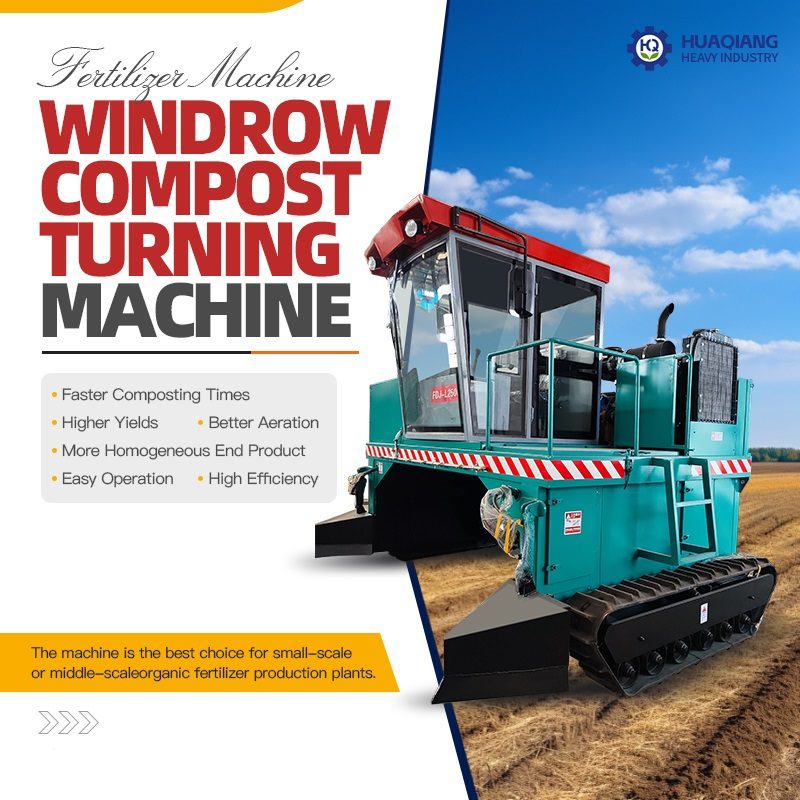
Fermentation turning is the core step in the organic fertilizer fermentation process. Common equipment includes trough-type turning machines, tracked turning machines, self-propelled turning machines, and hydraulic turning machines. Turning not only agitates the materials but, more importantly, provides oxygen, homogenizes, controls temperature, and accelerates composting. Aerobic fermentation relies on turning to introduce oxygen into the compost pile, ensuring sufficient contact between the inoculant, moisture, and materials. Turning also dissipates heat, preventing localized overheating and maintaining predictability in the fermentation process over a 7–10 day cycle.
In trough-type fermentation lines, the matching degree between the turning machine and the fermentation trough determines the batch throughput and turning uniformity. If the turning depth or traveling speed does not match the trough width, the fermentation cycle will be prolonged, increasing the moisture load in the subsequent granulation stage. Therefore, the stability of the fermentation turning stage directly determines whether the downstream organic fertilizer granulation equipment can operate as expected.
IV. Frequently Asked Questions Regarding Organic Fertilizer Granulation Equipment Selection
Q1: Is a dryer always necessary for a disc granulator?
Wet disc granulation produces granules with a high moisture content, typically requiring drying before cooling and screening. Without drying, granule strength is insufficient, screening efficiency is low, and the yield rate drops significantly.
Q2: Are roller-pressed granules less appealing than disc granules?
Roller-pressed granules are irregularly cylindrical or flattened round, with lower sphericity than disc granules. If the target market has a clear preference for spherical appearance, the disc granulation route is more suitable; if the end-user market primarily uses them as base fertilizer for field crops and cash crops, granule shape has less impact on selling price, and the energy efficiency advantage of roller pressing is more easily realized.
Q3: Can an existing disc granulation line be converted to a roller pressing route?
The granulation section can be replaced with a roller press granulator while retaining the batching, crushing, screening, and packaging sections, with the corresponding dryer eliminated or bypassed. Before conversion, the moisture content of the fermentation output and production capacity must be calculated to avoid a mismatch between the front-end fermentation capacity and the back-end extrusion capacity.