
Bio Organic Fertilizer Production Line Installation: Where Steel Meets Soil
It towers over the construction site, its yellow boom swinging slowly against a pale blue sky, lifting a massive double shaft mixer off a flatbed truck. Below, a dozen workers in hard hats guide the machine into position, hand signals cutting through the diesel rumble. This isn’t a factory tour. This is installation day—the moment when a bio organic fertilizer production line transforms from a blueprint into steel and concrete reality.
The site stretches across two acres of leveled ground, still raw with fresh gravel and the smell of new welding. At one end, the foundation for the fermentation section is already poured—a series of long, parallel concrete trenches, each one precisely leveled to within millimeters. Workers in coveralls are bolting steel rails to the trench walls, checking alignment with laser levels. These rails will soon carry the heart of the line: the chain compost turner.
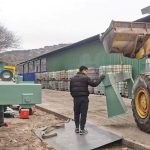
That machine sits nearby, still wrapped in shipping plastic, its massive rotor assembly resting on wooden blocks. A technician from the manufacturer crouches beside it, flipping through a manual, pointing at hydraulic lines while an electrician traces wiring diagrams. When it’s finally lowered onto the rails later this week, this turner will spend the next decade straddling these trenches, churning through thousands of tons of manure and straw, waking up the microbes that turn waste into black gold.
Beside the fermentation area, a crusher and vibrating screener are being assembled. A mobile crane lifts the screener’s upper deck into place as riggers guide it with ropes. The welders are already attaching support brackets for the conveyor that will connect these two machines. One worker uses a torque wrench on the crusher’s bearing housings, methodically checking each bolt to spec. This is where the finished compost will be refined—broken down, screened, and made uniform before it moves to the next stage.
The granulation building is further along. Here, a disc granulator sits on its foundation, massive steel rollers gleaming under temporary work lights. Technicians in blue coveralls are aligning the feed hopper, their instruments measuring angles and clearances with obsessive precision. A forklift carries a pallet of control panels toward the electrical room, where an electrician is already pulling armored cables through conduits. The granulator will take the refined compost powder and squeeze it into dense, uniform pellets—no water, no binders, just pressure and precision.
Behind the granulator, the rotary dryer and cooler are being positioned end to end. These are the giants of the line—drum cylinders nearly three meters in diameter, their steel skins marked with lifting lugs and access doors. A mobile crane with a spreader bar is carefully lowering the dryer onto its trunnion rollers while a surveyor watches the level through a transit. The fitter crew is already installing the burner assembly at the dryer’s inlet. Once running, this machine will drive moisture out of the fresh granules, ensuring they won’t mold or degrade in storage.
Nearby, a coating machine sits on temporary stands waiting for its foundation to cure. A technician in a hard hat is calibrating the spray nozzles, adjusting air pressure and flow rates. This machine will apply a thin, invisible layer of oil or anti caking agent to the finished granules—a final touch that protects the product and the beneficial microbes it carries.
The packaging area is alive with activity. An automatic packing machine is being assembled in sections: the weighing hopper, the bag clamp, the sewing head. A conveyor line snakes away from it toward a palletizer, which sits like a steel spider waiting for its first pallet. Workers in dust masks are running test bags through the system, checking weights, adjusting sensors. A quality control technician takes samples, marking them with tape and a sharpie, building the first batch records for the plant’s future certification.
Between every machine, conveyors are being installed—some flat belt, some bucket elevator, some screw type. They link the equipment like arteries, carrying material from one station to the next. A crew of millwrights is aligning a belt conveyor between the screener and the granulator, checking that the belt tracks straight, that the idlers spin freely, that the safety cables are tensioned correctly. Every joint, every weld, every electrical connection is being inspected, tested, signed off.