
Chain compost turning machine: A Precision Controller of Material Displacement
In the grand narrative of aerobic fermentation, material displacement is never merely a matter of simple transport; rather, it is a finely tuned orchestration involving oxygen, temperature, and microbial activity. The advent of the chain compost turning machine has elevated this process from rough, experience-based operation to precise engineering control. It does not simply “turn” the material; instead, it employs mechanical rationality to redefine the order of material flow across time and space.
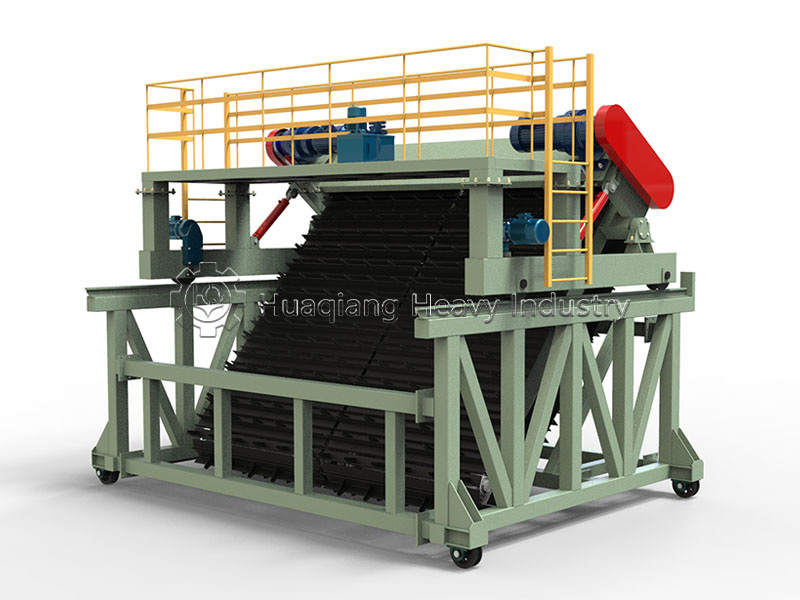
The essence of the chain compost turning machine lies in its unique mechanism of “fixed-quantity, fixed-distance displacement.” As the multi-toothed chain plate operates—functioning much like a mobile conveyor—material at the bottom is continuously scooped up and cast onto the inclined chain plate. During this process, the material does not scatter haphazardly; after being lofted and thoroughly aerated, it moves backward within the fermentation channel in a regular, equidistant manner. Each turning cycle corresponds to a precise displacement step; this incremental backward movement transforms the entire fermentation channel into a continuous reactor, with time and space serving as the horizontal and vertical axes, respectively. Fresh material is continuously received at the inlet, while matured product is discharged on schedule at the outlet—effectively allowing the material’s entire lifecycle to be precisely measured by the rhythm of the chain plate.
It is precisely this accurate control over material displacement that allows the chain compost turning machine to transcend the category of conventional machinery and become a pivotal element in optimizing the fermentation process. It converts decisions regarding turning timing and displacement distance—previously reliant on human experience—into quantifiable, repeatable engineering parameters, thereby establishing an automated and standardized material flow system. In a sense, the chain compost turning machine controls far more than just material displacement; it governs the efficiency and quality of the entire aerobic fermentation process, using precise, incremental steps to measure the value-creation path as organic waste transforms into a resource.