
One Big Turn: Can Cow Dung Become Treasure?
Have you ever seen that brown, hill-like pile in a cow manure fermentation yard? Wet, sticky, and carrying a sour, fermented smell of silage. Yet this stuff that everyone avoids can, under the hands of a large wheel compost turner, become dark, shiny organic fertilizer that makes soil sing. Sounds like magic? Let’s follow an installation on site.
Early that morning, a flatbed truck delivered a large wheel compost turner to the livestock farm’s composting area. Its body was silver and green, with four wide rubber wheels and a turning drum across the middle, equipped with rows of toothed blades. It looked solid and powerful. Unloaded alongside were a cage crusher, a double shaft mixer, a rotary screener machine, and an automatic packing scale. These steel brothers were about to form a complete cow manure processing line.
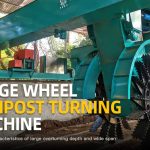
The veteran installer knelt down without a word. With a spirit level and a laser ruler, he carefully calibrated the guide rails along the fermentation bay. The large wheel turner runs on rails; if the rails aren’t level, the drum will scrape the ground and fling manure everywhere. Workers secured the rails with shims and expansion bolts, then installed travel limit switches on the turner—so it would reverse automatically at the end of the bay, worry-free.
Next came the hydraulic lift system. The drum’s height above ground had to be adjustable: raise it when the pile is high, lower it when the pile settles, so the blades just slice into the base without gouging the hardened floor. As the installer tightened the hydraulic fittings, he warned, “Cow manure has long fibers, more clingy than chicken manure. Leave enough clearance on the blades.”
The other equipment went in simultaneously. The crusher stood at the front of the fermentation bay—to break up clumps of raw manure. The mixer came after, blending the manure with rice husks and microbial inoculants. The rotary screener was placed at the outlet of the turner’s work zone, separating fine fertilizer from coarse residue. And the packing scale waited at the end, bagging the final product. From crushing to bagging, a complete flow.
Commissioning day was the real show. The operator climbed into the cab, turned the key, and the diesel engine roared. Engage the gear, release the brake. The turner crept forward along the rails. The drum spun, blades lifting cow manure from the bottom of the pile, tossing it up, and smashing it down behind. In an instant, white steam billowed from the heap—the energy released by fermentation at over sixty degrees Celsius inside. Air rushed into the loosened material. The sharp smell of ammonia and sourness faded quickly. Where the drum had passed, the pile became as fluffy as freshly tilled black soil.
The operator jumped down, grabbed a handful, and squeezed. He smiled. “Now it breathes. Good fertilizer!”
Someone asked: do you really need such a big wheel to handle cow manure? The answer is simple. Cow manure has high moisture and long fibers. Ordinary mixers can’t stir it, and small turners can’t flip it. But a large wheel turner has a wide span and powerful blades, capable of thoroughly loosening a pile over two meters deep in one pass. Pair it with crushing, mixing, screening, and bagging, and a farm can turn daily waste into daily wealth—odor gone, fields thriving.
So when that big wheel turns, it’s not just turning manure. It’s turning the living water of circular agriculture. Next time you see lush green crops, chances are this steel giant has been working quietly behind the scenes.