
The Turning Wheel: The Future of Fertilizer Equipment?
In today’s global wave of commitment to sustainable agriculture, the efficient processing and conversion of organic waste have become an indispensable part. The large wheel compost turning machine, as a star equipment in this field, is fundamentally transforming the landscape of fertilizer production with its outstanding performance and innovative design. Imagine a giant wheel rolling slowly across a compost field: wherever it passes, the compost materials are evenly turned, oxygen permeates fully, microbial activity intensifies, and the decomposition process accelerates significantly. This is not just mechanical movement but a harmonious dance between nature and technology.
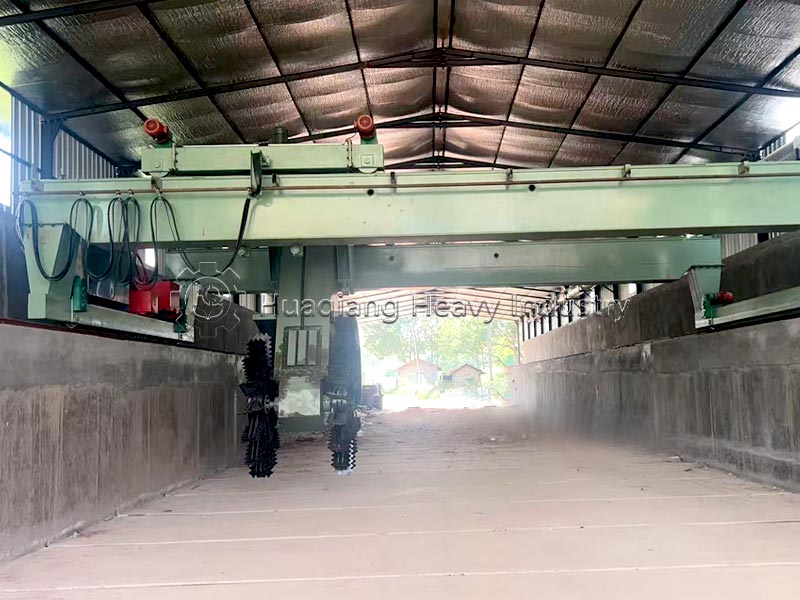
Compared to traditional turning methods, the large wheel compost turning machine demonstrates unparalleled advantages. Traditional methods rely on manual labor or small tools, which are time-consuming, labor-intensive, and uneven in effect; in contrast, this machine can cover large compost areas, completing turning tasks in a short time and significantly improving efficiency. More importantly, through precise control, it ensures that the moisture and temperature of the compost remain optimal, thereby producing high-quality organic fertilizer. Rich in nutrients, this fertilizer effectively improves soil structure, promotes crop growth, and realizes a circular economy in agriculture.
However, the journey of fertilizer production does not stop at turning. In modern fertilizer processing systems, other equipment also plays crucial roles. For example, chain crushers are responsible for breaking down raw materials such as straw and manure into fine particles, laying the foundation for subsequent processing; mixers act like skilled chefs, uniformly blending various ingredients in proportion to ensure the scientific formulation of fertilizer; granulators further compress mixed materials into granular form, facilitating transportation and storage while controlling release rates to improve fertilizer utilization. Additionally, equipment like drum fertilizer dryers and packagers together build a complete production line.
The collaborative work of these equipment makes the conversion process from organic waste to high-quality fertilizer efficient and environmentally friendly. As a core component, the large wheel compost turning machine seamlessly integrates with other devices, forming an intelligent processing system. With the development of the Internet of Things and artificial intelligence technologies, these equipment are becoming smarter: sensors monitor compost parameters in real time, automatically adjusting operations; remote control systems allow managers to monitor production status anytime, anywhere. This not only reduces labor costs but also minimizes energy consumption and environmental pollution, truly achieving green production.
Looking ahead, the development trend of fertilizer equipment will focus more on intelligence and sustainability. The large wheel compost turning machine may integrate more advanced technologies, such as solar power or biometric controls, to further enhance energy efficiency. Meanwhile, as global demand for organic agriculture continues to grow, these equipment will play a greater role in promoting food security and ecological balance. In summary, the large wheel compost turning machine and its supporting equipment are not just tools but catalysts for agricultural transformation, guiding us toward a greener and more efficient future.