
How Is Green Fertilizer Born? Unveiling the Organic Fertilizer Line Installation
Have you ever marveled at how eco-friendly organic fertilizer transforms from waste into a soil-nourishing treasure? The magic unfolds at the meticulous installation site of a complete organic fertilizer production line—a dynamic blend of cutting-edge engineering, agricultural science, and hands-on expertise. This on-site assembly is no ordinary construction; it’s the birth of a sustainable ecosystem that turns organic waste into gold for farmers worldwide.
Walk the site, and you’ll feel the hum of purpose in every corner. Towering fermentation tanks stand as the operation’s beating heart, engineered to nurture controlled composting where organic matter breaks down naturally, releasing rich nutrients. Beside them, robust crushing machines roar to life, pulverizing crop residues, animal manure, and food waste into a fine, uniform powder—laying the groundwork for seamless processing. Winding through the space are belt conveyor, like silvery arteries, gliding materials steadily from one station to the next, eliminating manual labor and keeping the workflow efficient and uninterrupted.
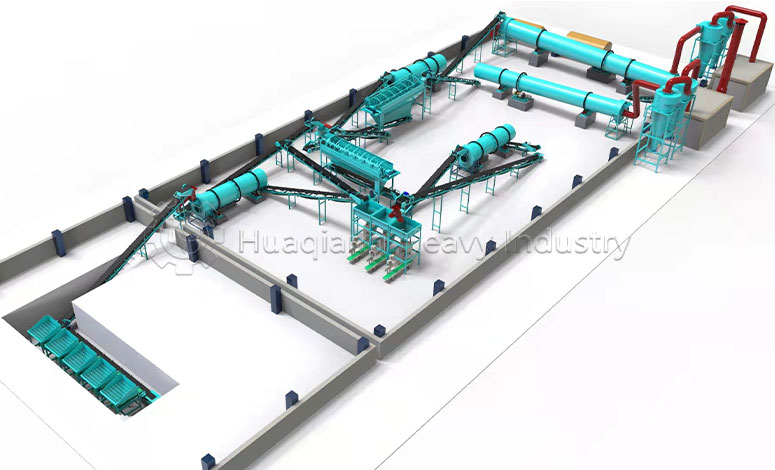
But the core organic fertilizer production line is just the start. A suite of specialized auxiliary equipment completes the puzzle, each piece playing a vital role in refining the process. High-precision mixing units blend different organic ingredients and nutrients with meticulous care, ensuring every pellet boasts balanced nutrition. State-of-the-art disc granulator then shape the loose powder into uniform, dust-free pellets—easy to handle, store, and apply. Next, powerful drying and cooling systems step in, gently stripping excess moisture and stabilizing the product’s quality, while precision screeners filter out imperfections and automated packaging machines seal the final fertilizer into sturdy, labeled bags, ready for shipment.
Every step demands the sharp focus of skilled technicians and engineers. They move with the grace of artisans, aligning components with millimeter-perfect precision, calibrating machines to perfection, and testing connections tirelessly to eliminate glitches. Their work turns a stack of metal parts into a synchronized, eco-friendly system—one that runs on low energy, minimizes waste, and upholds the highest safety standards.
As the last bolt is tightened and the system roars to life for its first test, a powerful vision takes shape. This fully installed production line isn’t just machinery; it’s a bridge between waste and abundance, a cornerstone of the circular economy. It turns what was once discarded into a lifeline for soil health, boosting crop yields naturally while cutting down on chemical fertilizers. Witnessing this transformation unfold is nothing short of inspiring—a vivid reminder that when human ingenuity partners with nature, we can grow a greener, healthier, and more sustainable future for global agriculture.