
Twin Screws Churn What Makes Waste Give In?
Walk into the installation site of a double screws compost turner, and you might think you’ve stumbled into the belly of a giant mixer. Two thick screw shafts lie side by side above a long fermentation trench, like sleeping dragons. Workers swarm around them, sweating hard – this isn’t just turning compost. It’s giving waste a deep tissue massage.
The most fascinating part of the double screws turner is, of course, the two parallel shafts. When they rotate, the paddles push material from the center outward or from the sides inward – like two big hands kneading dough. During installation, the parallel alignment of the two shafts must be controlled to within a millimeter. An old fitter lies on the rail, eye glued to a spirit level, muttering, “Lower the left side half a millimeter… good, stop!” Beside him, a young worker slowly tightens the nuts with a wrench, each turn careful not to disturb the heavy steel shaft.
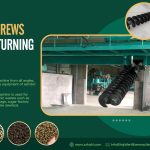
The turner’s rails are mounted on top of the two sidewalls of the fermentation trench. The trench itself is a long concrete structure – like a riverbed that will soon be filled with steaming, fermenting material. Rail installation is the backbone of the whole job. Both rails must be level and parallel, otherwise the turner will run crooked, and the screw paddles will scrape the trench bottom, throwing sparks. Workers calibrate with a laser level, marking every meter – more precise than laying railway tracks.
Besides the double screws turner, other equipment is being installed in parallel. At the feed end of the trench, a heavy duty chain fertilizer crusher is being assembled. Its blade rotor looks like a turbine fan, ready to shred bales of straw and clumps of manure into fine bits. Next to it, a horizontal mixer is already in place two workers are connecting its inlet and outlet. A warning sticker on the mixer’s belly reads: “Keep hands out while running.” That’s no joke.
Under the trench floor, rows of aeration pipes have been pre buried. A blower sits on a concrete pad in the corner, and an electrician is hooking up the power cable. When the blower starts, air will squeeze out through tiny holes like countless bubbles burrowing into the pile, feeding oxygen to the microbes. These pipes have all been air tightness tested: soapy water on every joint, no bubbles, no pass.
At the discharge end of the trench, a rotary screener machine leans on its support frame. The mesh isn’t fully wrapped yet; a worker squats beside it, pulling wires tight with a special tool, winding them like guitar strings. Behind the screener, a belt conveyor has already been laid out, its black rubber belt glowing matte in the afternoon sun.
As dusk falls, installation winds down. Power on test – the twin screws turn slowly, the two shafts dancing in perfect sync, their paddles cutting the air with a low whoosh. The crusher barks briefly. The mixer rumbles. The screener shakes its body. The blower hums softly in the corner. All the sounds blend into a rough but powerful construction site rock band.
Tomorrow, the manure and straw will pour in. These steel beasts will churn, toss, aerate, and screen day and night, turning stinking waste into dark, rich organic fertilizer. What makes the double screws turner so effective at making waste give in? It’s those two tireless screw shafts – and the crew of installers who care about every single millimeter.