
【FAQ】Can organic fertilizer raw materials with a moisture content of 30% be directly extruded?
No, conventional double-roll extruders cannot handle 30% moisture content. The general moisture window for dry extrusion of organic fertilizer is 10%-20%, with a roller gap of only 0.2-0.8 mm. This makes them more sensitive to moisture content than flat or ring dies. It is recommended to strictly control the moisture content between 12% and 16%. If the moisture content exceeds 20%, the material will stick to the rollers, clump, and experience poor feeding. At 30%, the material becomes too soft and sticky, forming “blocks” in the die orifices, making slippage and die clogging almost inevitable. While some medium-sized double-roll extruders on the market claim to handle materials with 15%-30% moisture content, this is a “wide-range” capability under specific configurations and not all equipment labeled “double-roll extrusion” possesses this capability. If the roller surface design, pressure, and anti-sticking configuration are not confirmed during the selection process, directly feeding 30% moisture into the machine will result in a very high probability of failure.
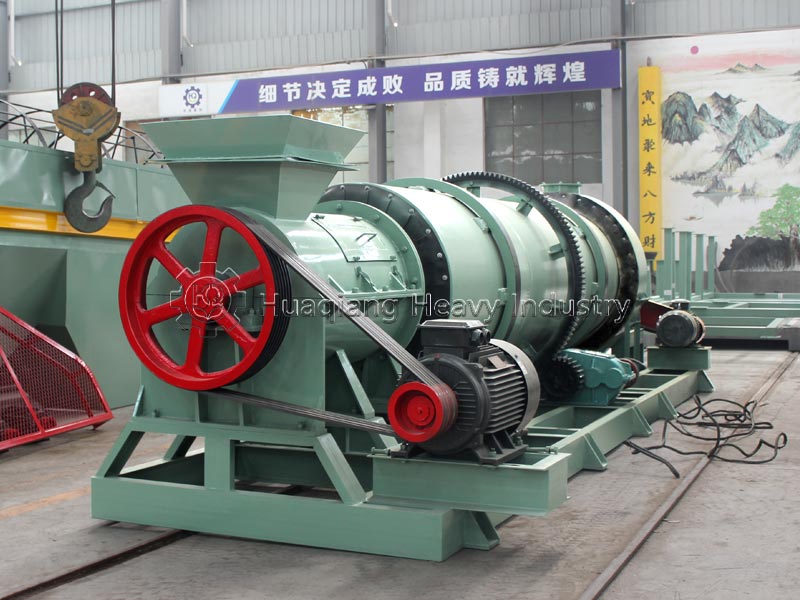
I. Differences in Extrusion Moisture Window: Conventional, Double-Roll, and Wide-Range Extrusions Are Not the Same Thing
“Extrusion granulation” is a broad category, and the moisture window cannot be summarized by a single number.
The industry standard for conventional extrusion (flat die/ring die) is relatively broad, with a typical feed moisture content requirement between 10% and 20%, and an optimal range of 12% to 18%. Flat and ring dies have longer die orifices, allowing for slightly higher tolerance to moisture, but it is generally not recommended to exceed 18%.
Double-roll extrusion is the most sensitive to moisture. Because the gap between the two rollers is extremely small (0.2–0.8 mm), even slightly damp material will slip on the roller surface and become caked at the die orifice. The safe window for double-roll extrusion is usually 12%–16%, and for pure organic fertilizer (such as well-rotted chicken manure), it can be relaxed to 20%–25%, but this is the upper limit, not the norm.
“Wide-Range” extrusion models are another variable. Some medium-sized double-roll granulators, through wear-resistant alloy roller surfaces, automatic adjustment devices, and anti-stick designs, claim to be able to process materials with 15%-30% moisture content, achieving a granulation rate of over 92%. However, the existence of these models precisely illustrates that 30% moisture content is beyond the capabilities of conventional double-roll granulators—it requires specialized configuration to barely cover, rather than being the default capability of the equipment.
II. The Position of 30% Moisture Content in the Disc, Agitator, and Extrusion Processes
Placing 30% moisture content on the coordinates of the granulation process, its classification is very clear.
The industry’s prevailing decision-making logic is: moisture content above 30% uses the wet process, below 20% uses the dry process, and between 20% and 30%, both methods can be tried. 30% precisely falls at the starting point of the wet process range.
The agitator granulator is the most suitable equipment for 30% moisture content. The agitator teeth are suitable for moisture contents of 30%-50%. The high-speed rotating agitator teeth, through shearing and airflow entrainment, can force high-moisture materials to agglomerate into balls, achieving a balling rate of over 90%. Disc granulators can also operate within a moisture window of 25%-35%, but 30% is close to its wetter side, requiring controlled water spraying to prevent sticking to the disc.
Roller extrusion is on the edge of a “forbidden zone” at this moisture level. 30% moisture is far higher than the conventional 12%-16% window for roller extrusion. Even if a wide-range model claims to cover this, it means the equipment is operating under boundary conditions, which will reduce stability, output, and roller life. If the raw material consistently remains around 30% moisture, choosing agitator teeth is more logical than choosing roller extrusion, rather than relying on a “wide range” to cope.
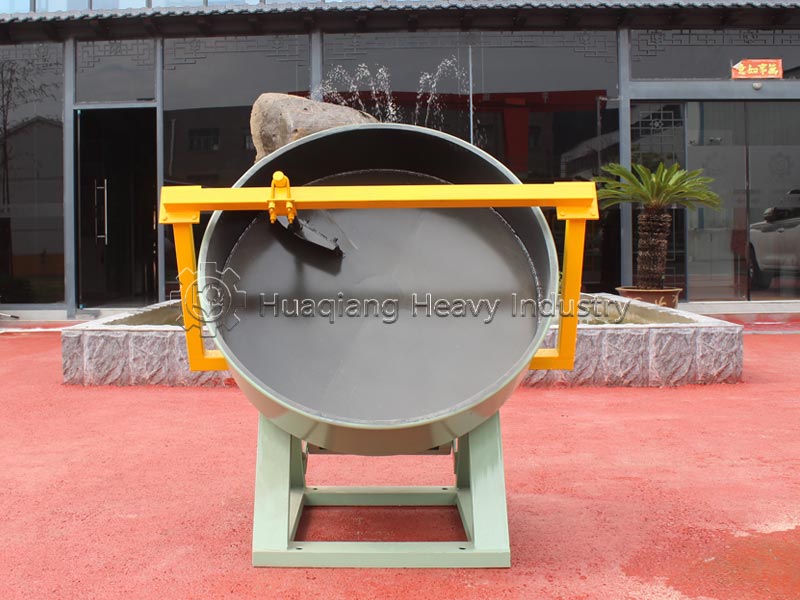
III. The Die-Blocking Mechanism of Direct Extrusion Without Dehydration: How Moisture “Clogs” the Die Orifices
30% moisture entering the rollers causes die blockage, which is not accidental but physically inevitable.
Step 1: Roller Slippage. When the moisture content is too high, a liquid film forms on the surface of the pressure roller, causing a sharp drop in the coefficient of friction. The pressure roller rotates but cannot “grasp” the material, which spins freely in the roller gap and cannot enter the die orifice, resulting in a significant drop in output.
The second step: Die orifice “blockage”. Even if some material is forcibly brought into the die orifice, the high moisture content makes it soft and sticky, compacting it into a dense “block” within the orifice instead of being extruded smoothly. The blockage becomes increasingly tight, continuously shrinking the effective cross-section of the die orifice, leading to increased current and temperature, and in severe cases, machine stalling and shutdown.
The third step: Roller sticking and cake formation. When the moisture content exceeds 20%, the material adheres to the roller surface, forming a cake. At 30% moisture content, roller sticking is almost continuous, significantly increasing the cleaning frequency and compressing the effective operating time.
There are only two corresponding solutions: either reduce the moisture content (aging, remixing with dry material, dehydration) to force the moisture back into the extrusion window; or change the process (using agitators) to adopt a wet process with accompanying drying. There is no shortcut to “force extrusion by adjusting pressure”—the higher the pressure, the more severe the slippage and wear.
IV. FAQ: Frequently Asked Questions about 30% Moisture and Extrusion Granulation
Q1: How to distinguish between wide-range extrusion and ordinary extrusion?
Look at three verifiable configurations, not just the term “wide-range.” First, roller surface design: Ordinary rollers are smooth or have regular grooves, while wide-range models usually have anti-stick coatings or special groove designs to handle higher moisture content. Second, pressure and gap adjustment range: Wide-range models require a larger pressure adjustment margin and more flexible gap control to maintain engagement when moisture content fluctuates. Third, does the manufacturer’s moisture window come with conditions: If it claims “15%-30%” but requires “non-sticky material, acceptable fineness, and adjustable return ratio,” then 30% is a boundary, not a comfort zone. When selecting a model, have the manufacturer test the machine with your actual material; this is more reliable than relying on figures in brochures.
Q2: Is there a way to directly extrude material with 30% moisture content without drying? “Moisture reduction” is possible without necessarily “drying,” but the moisture must be brought back to the extrusion window. Possible pathways include: extended aging and turning, remixing undersize dry material, and mechanical dehydration. The extrusion route is only viable if these methods can stably reduce the moisture content to below 20% (below 16% recommended for roller extrusion). If there are no upstream moisture reduction methods, directly feeding 30% moisture into the roller extrusion will inevitably lead to die blockage and slippage.
Q3: If using a stirring tooth process with 30% moisture, is drying the granules necessary?
The stirring tooth process is a wet process, and the output moisture content is still relatively high, usually requiring drying. Granules granulated with a stirring tooth process typically have a moisture content of 30%-40%, making safe storage impossible without drying. However, the advantage of the stirring tooth process is its ability to stably handle 30% feed, unlike roller extrusion which struggles at the moisture boundary. If the investment in drying is worthwhile, a stirring tooth process combined with drying is a smoother process combination for 30% moisture content; if the goal is “no drying at all,” the roller extrusion route needs to be reverted to, but only if the upstream moisture content is truly reduced.