
New Cost-Reduction Strategies for Small-Scale Organic Fertilizer Production Lines: 5 Practical Methods That Can Be Implemented Immediately
For family farms, livestock farms, or startups, how can they achieve maximum results with minimal investment within a limited budget when investing in a small-scale organic fertilizer production line (1000-5000 tons per year)? The answer lies not in simply reducing equipment investment, but in scientifically planning the process, selecting the right core equipment, and optimizing operational processes. This article outlines five practical cost-reduction techniques to help you start organic fertilizer production at a lower cost.
Technique 1: Precisely Select Equipment Based on Capacity to Avoid “Using Overkill”
The core of a small-scale production line is “good enough.” For a daily output of 5-10 tons, a chain-plate turning machine (investment of approximately $10,000-$20,000) is sufficient to complete the fermentation and turning tasks; there is no need to pursue large wheeled equipment. For the granulation stage, a disc granulator (investment of $30,000-$50,000) or a flat die pelleting machines (investment of $20,000-$40,000) can be selected, both of which can meet the needs of small to medium-sized operations. Blindly pursuing large equipment not only doubles the initial investment but also significantly increases daily energy consumption and maintenance costs. Tip 2: Optimize Fermentation Process, Shorten Cycle, and Reduce Costs
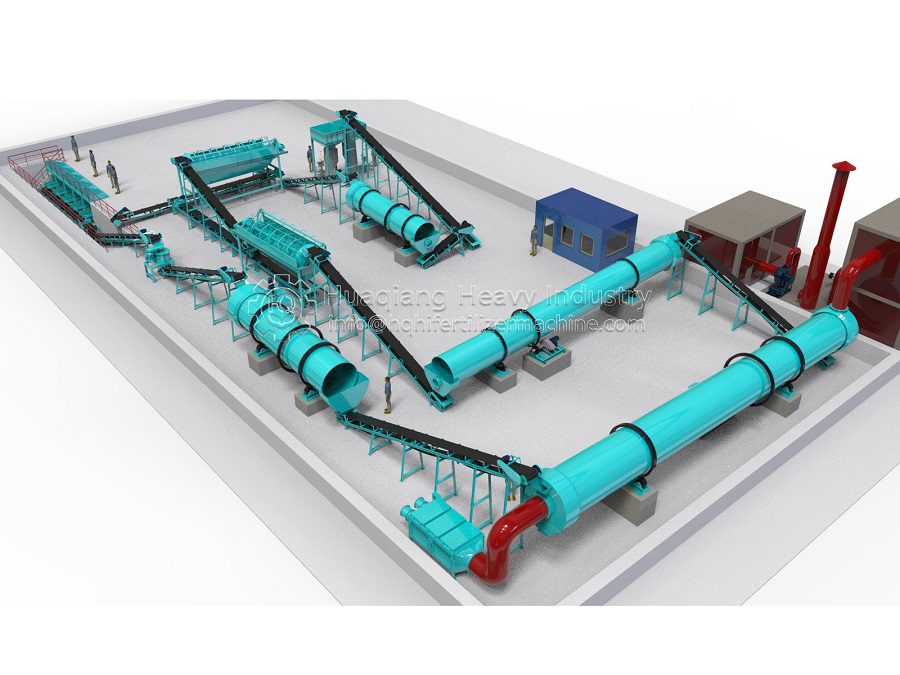
Fermentation is the core step in organic fertilizer production and also the major cost component. By scientifically controlling the carbon-to-nitrogen ratio (25-30:1) and moisture content (55%-65%), and maintaining a turning frequency of once every 2-3 days, the fermentation cycle can be compressed from the traditional 60 days to 15-20 days. A shorter cycle means increased site turnover, lower labor costs, and reduced capital occupation. While using high-efficiency fermentation agents (0.5-1 kg per ton) increases the initial investment, it accelerates heating and reduces the number of turnings, resulting in significant overall benefits.
Tip 3: Simplify Process Flow, Eliminate Unnecessary Steps
Not all organic fertilizers require granulation. If the target market accepts powdered products, granulation, drying, and cooling can be omitted. The entire production line only requires four processes: crushing, mixing, screening, and packaging, reducing equipment investment by over 40% and power consumption per ton of product from 25 kWh to below 8 kWh. For scenarios requiring granular products, prioritize dry extrusion processes that do not require drying to further save fuel costs.
Tip 4: Utilize Existing Site to Reduce Construction Investment
Small-scale production lines are not demanding in terms of site requirements. Hardened ground or flat soil can serve as the fermentation area, eliminating the need for expensive foundation tracks. Utilizing existing farmhouses and warehouses as raw material sheds and finished product storage areas can save tens of thousands of dollars in construction costs. A compact, linear layout shortens material transport distances and reduces the number of belt conveyors.
Tip 5: Emphasize Daily Maintenance to Extend Equipment Lifespan
Equipment maintenance is a key factor in controlling hidden costs. After daily operation, clean residual material from the turner’s rollers and chassis to prevent drying and jamming; add bearing grease every 200 hours; and promptly replace worn chains and cutters. A standardized inspection process can reduce equipment failure rates by 70%, extend service life by 3-5 years, and keep annual maintenance costs below 5% of equipment investment.
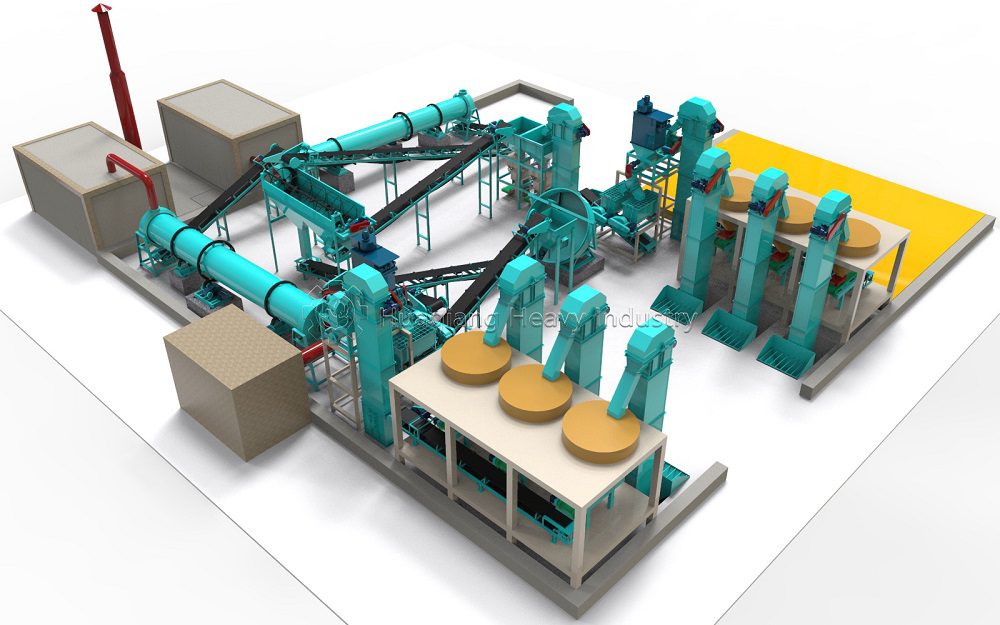
The core logic of small-scale organic fertilizer production is “matching”—capacity matching, process matching, and input matching. Contact us for customized cost-reduction solutions for small-scale organic fertilizer production lines.
The five cost-reduction techniques emphasize the importance of selecting the right organic fertilizer production equipment. The process begins with organic fertilizer raw material processing equipment, such as a half-wet material crusher machine, which prepares the fermented compost to the ideal particle size. This prepared material is then ready for the shaping stage, the essence of organic fertilizer production granulation. Within the organic fertilizer granulator series, several options exist for small-scale lines. A disc granulation production line (a classic organic fertilizer disc granulation production line) is a cost-effective choice for producing spherical granules. For an even more compact solution, a new type two in one organic fertilizer granulator can combine the final stages of conditioning and initial granulation. The key to cost reduction is not simply buying the cheapest equipment, but precisely matching the machine’s capacity to the production scale. For a daily output of 5-10 tons, a disc granulator or flat die granulator is ideal. Over-investing in larger machines like a rotary drum granulator would lead to higher energy and maintenance costs. By carefully selecting the right organic fertilizer production equipment from the organic fertilizer granulator series and optimizing the fermentation process, small-scale producers can achieve a low-cost, efficient, and profitable operation.