
【FAQ】What to do if granular fertilizer is not hard enough and easily crumbles?
Answer: Granular hardness depends on the intermolecular bonding force between materials and the degree of physical compression during the forming process. If the granules are loose and brittle, you can check and optimize from the following four core dimensions:
- Optimize material formulation and moisture balance
Adjust the moisture ratio: Moisture is the “binder” in granulation. In disc or drum granulation, too low a moisture content will lead to difficulty in nucleation and a loose granule structure. It is generally recommended to control the moisture content of the material in the granulation zone between 12% and 15%.
Add a professional binder: If the raw materials are mostly inert substances or fibers, it is recommended to add an appropriate amount of bentonite, kaolin, or a special organic binder. These substances can fill the tiny pores between particles and significantly enhance the internal cohesion of the particles.
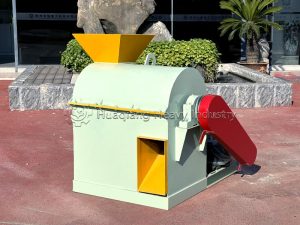
Raw material fineness: Raw material particles that are too coarse will produce a “skeleton effect,” making the particle surface rough and the internal bonding weak. Controlling the fineness of the raw material to 50-80 mesh using a horizontal pulverizer can significantly improve the density of the particles.
- Enhance Granulation Process Pressure

Roller Extrusion Granulation: If you are using an extrusion granulator, insufficient hardness is usually due to low pressure setting or worn rollers. Increasing the pressure between the rollers by adjusting the hydraulic system can force out air from between the materials, resulting in higher particle density.
Drum/Disc Residence Time: In wet granulation, appropriately adjusting the disc angle or drum speed increases the “rolling times” of the material within the machine, allowing the particles to become more solid through layering.
- Precise Control of Drying and Cooling Processes (Critical Steps)
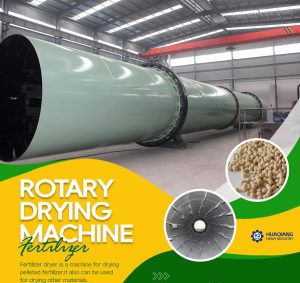 Gradient Drying: Excessively high drying temperatures can cause the particle surface to crack too quickly (wet inside, dry outside), forming a “hollow shell.” A drum dryer should be used for low-heat sequential drying, allowing moisture to dissipate evenly from the inside out.
Thorough Cooling: Freshly dried particles are at a high temperature; direct packaging will cause condensation and soften the particles. A counter-current cooler must be used to cool the particles to room temperature. This not only solidifies the binder but also allows the particles to achieve their final strength through “cold hardening.”
- Post-Production Surface Coating Treatment

Coating Machine Application: Add a disc coating machine or rotary drum coating machine at the end of the production line. A protective film is formed on the particle surface by spraying a small amount of oil-based anti-caking agent or special resin.
Function: This film not only isolates moisture in the air to prevent the particles from absorbing moisture and pulverizing, but also fills surface micro-cracks, significantly improving the compressive strength of the finished product.
- Equipment Maintenance and Inspection
Check if the granulator liners are worn, causing uneven material distribution.
Check if the grading screen is malfunctioning to prevent a large amount of fine powder from mixing into the finished product, creating a visual illusion of “pulverization.”
Professional Summary: Solving pulverization problems usually depends 30% on the formula and 70% on the process. If your particle hardness consistently fails to meet the standard, it is recommended to first check the fineness of the raw material grinding and the cooling effect of the cooler. For technical support, we can provide customized granulation experimental data based on your raw material ratio.
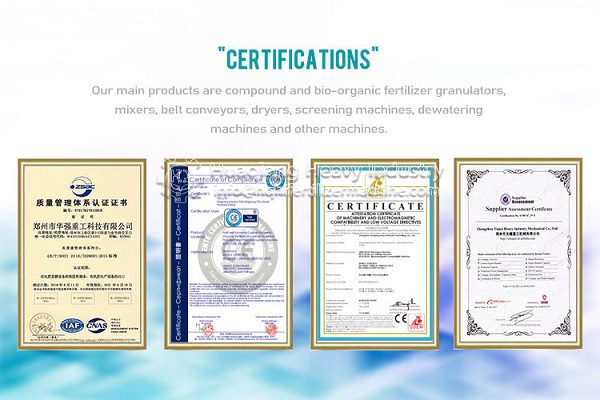
If you still have any questions about fertilizer production equipment or would like to learn more about customized solutions, please feel free to contact us. Whether it’s equipment selection and pricing, installation, commissioning and operation training, or after-sales maintenance and process upgrades, we can provide you with professional and timely answers and support to help your project be implemented efficiently.